
Reader Story
Treatment for Neuropathy in Legs and Feet: Why Hank's Stopped at the Ankle While the Numbness Kept Climbing
Every treatment he was handed was built for his feet. By the time he noticed his shins, the line had already moved.
By the HealthVital editorial team · 8 min read
Hank, 72, went looking for a treatment for neuropathy in legs and feet on the night he pulled his sock off and found he couldn't feel the elastic. Not on his foot. On his shin, four inches above the ankle bone. For three years the numbness had been "a foot problem." That night he sat on the edge of the bed with a pen and drew a line on his own leg where the feeling stopped. A week later, he drew another one. It was higher.

He taught high school shop for thirty-one years. He is a man who measures things. And what he measured on his own leg scared him more than anything his doctor had said, because it meant the problem wasn't sitting still. It was moving.
"Everybody kept treating my feet," he told us. "Nobody told me it was going to come up the leg."
Why it starts in the toes and climbs
If you've noticed the same thing, here is what's going on, in plain shop-class terms. The nerves that feel your feet are the longest wires in your body. They run from the base of your spine all the way down to your toes, sometimes more than three feet of wire. Each one is wrapped in a protective coating, the same way the cord on a table saw is wrapped so the copper never touches anything it shouldn't.
When that coating starts to wear, the longest wires show it first, simply because there's the most of them to wear. That's the toes. As the wear continues, shorter and shorter nerves start to show it too, and the line of numbness creeps up: the ball of the foot, the arch, the ankle, the shin. Doctors even have a name for the pattern. They call it "stocking" distribution, because it fills in from the bottom like pulling on a sock. Over enough years, some people feel it reach their fingertips, the next-longest wires in the body.
"So the line on my leg," Hank said, "is a ruler for how much wire is going bad." In his way of seeing it, yes.
What he'd tried, and where each one stopped
Look at the list Hank collected, and notice where every item ends.
- The foot cream. A lidocaine cream, then a capsaicin one. Applied to the feet. Twenty quiet minutes.
- The insoles. Two pairs of cushioned orthotics, the second set $280. They live in his shoes. On his feet.
- The foot bath. A vibrating foot spa his son gave him for Christmas, now in the hall closet.
- The prescription. A nerve pain pill that helped him sleep and made him so wobbly at the workbench that he stopped using the band saw.
Some of those things may help some people get through the night, and nobody should stop something their doctor gave them. But every one of them was aimed at the symptom where it showed up first. None of them was aimed at why the line kept moving.
The question that doesn't make the pamphlet
A coating doesn't wear thin by itself. Something is wearing it. High blood sugar is one well-known culprit, and Hank's was only borderline. Low B12 can do it, and his was normal. So what was still at work, climbing a couple of inches a season, in a man whose blood work mostly looked fine?
That's the question a doctor who spent close to thirty years with nerve patients built his whole approach around. In his view, there's a natural process around the nerve that, once it tips out of balance, eats at the coating slowly, like corrosion working along a cable left out in the weather, and leaves a deposit behind as it goes. He gives that deposit a name of his own. He also believes it's why so many treatments for neuropathy in legs and feet feel helpful for an hour and change nothing about the line on your shin: they work on the surface of the skin, and the corrosion is happening along the wire.
That's one doctor's view, and not every neurologist would sign it. We're telling you about it because it was the first explanation that matched what Hank had been measuring with a ballpoint pen.
A fishing buddy and a tackle box
Hank's turn came from a man named Ray, who he's fished with every spring since the 1980s. Ray had the same trouble in his feet and had quit complaining about it last year, which Hank had noticed and not asked about, because that's how they are. In June, Ray opened his tackle box on the dock and there, between the sinkers and the line, was a bottle.
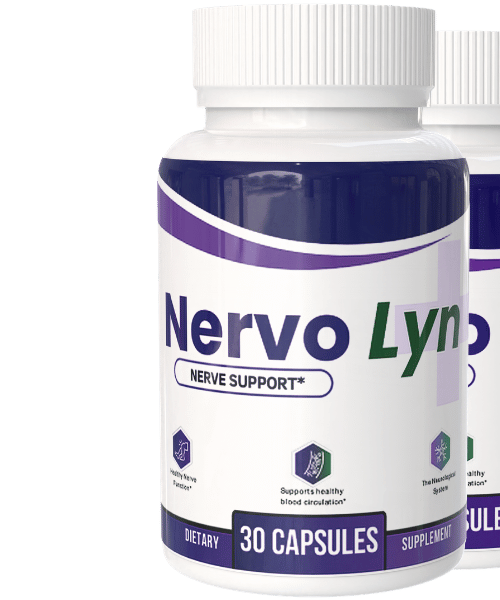
It was NervoLyn. Ray said his daughter, who works for a podiatrist, had put him on to it. Hank, being Hank, took the bottle out of his hand and read the whole label in the bright sun with his glasses pushed up on his head.
- Alpha lipoic acid, which the company calls one of the most studied antioxidants for the nerves of the hands and feet, to help protect nerve tissue from everyday oxidative wear. "That's your corrosion," Ray said.
- Turmeric extract, standardized to 95% curcuminoids, for the body's normal inflammation response around stressed nerves.
- Butcher's broom, an old herb for circulation, to keep blood moving all the way down the leg. "That's the part that made sense," Hank says. "My whole leg was the problem, not my foot."
- L-carnitine and Coenzyme Q10, both about energy inside the cells, the fuel a nerve needs to keep up its own repair work.
- Magnesium glycinate, 80 mg, a gentle form of magnesium the company ties to calm nerve signaling and sleep.
He took the label to his doctor, who said it wouldn't interfere with his blood pressure pill and told him to keep his appointments. One capsule a day. And a 60-day money-back guarantee, which, for a man with a $280 pair of insoles in his closet, mattered.
What the pen line did
Hank kept measuring. Of course he did.
- Week 1. Nothing. Line in the same place.
- Weeks 2 to 3. A strange new tingle in the arches that he didn't trust. Ray told him the same thing had happened to him and that he'd almost quit right there. Nobody can promise what that tingle means. Hank kept going.
- Month 1. The line stopped moving. That was the whole report, and for Hank it was the biggest one.
- Months 2 to 3. He felt the sock elastic on his shin again, first in the evening, then most of the day. He took the stairs at his daughter's building in September. Four flights, with the rail.
Why so slow? Nerves repair at their own pace, and the longest ones take the longest. The company says most people notice early changes in three to four weeks and fuller results over eight to twelve weeks of daily use. That's why Hank, who never in his life bought one board when he could buy the stack, went to the three-month supply.
If you've drawn your own line on your own leg, this is the label Hank read on the dock.
See what was in Ray's tackle box →Who it's for, and who should call a doctor first
It may be worth a look if you're over 50 and the numbness, tingling or burning started in your toes and has been working its way up, and the foot-only treatments have only helped for a while.
Call a doctor today, not a website, if the numbness came on suddenly, is on one side, comes with weakness, a drooping face or trouble speaking, or you have a foot sore that won't heal. If your blood sugar, B12 and thyroid have never been checked, do that first. And if you take medicine for blood sugar, blood pressure, blood thinning or nerve pain, or you're pregnant or nursing, show the label to your doctor before starting.
Hank's reason for saying yes was simple arithmetic. Sixty days, money back if his legs didn't notice. One order, no subscription. He'd already spent more than that on things that only ever reached his feet.
The line doesn't wait for you to decide. Every season it sits still is a season it isn't climbing.
Start your 60 days before it reaches the knee →P.S. Hank still has the pen line from that first night. He traced it over in permanent marker on a strip of masking tape and stuck it inside his workshop door, at shin height, "so I remember where it was going." If you're about to draw yours, read the label Ray handed him first. And if your trouble is still mostly in the toes, Del's story about whether nerve damage in the foot can heal is where this one began.
Individual results vary. Reader stories reflect personal experiences; names and some details changed for privacy. This is an advertisement and not a news article. Statements have not been evaluated by the FDA. This product is not intended to diagnose, treat, cure or prevent any disease.