
Reader Story
Can Nerve Damage in the Foot Heal? What Del's Doctor Told Him, and the Slow Corrosion Nobody Mentioned
The honest answer is "sometimes, slowly." What almost nobody explains is why the healing so often loses the race.
By the HealthVital editorial team · 8 min read
"Can nerve damage in the foot heal?" Del, 61, typed that into his phone in the parking lot of his podiatrist's office in May, before he even started the truck. He had carried mail for twenty-eight years, nine miles a day on foot, and now the bottoms of both feet felt like they belonged to somebody else: numb at the toes, hot at the arches, and a sharp jolt every so often that made him grab the tailgate.

The podiatrist had been kind and direct. Type 2 diabetes for eight years, early nerve damage in both feet, sugar "could be better." Some of it may improve, she said. Some of it may not. Keep your numbers down, check your feet every night, and come back in six months. "I wanted a yes or a no," Del told us. "I got a maybe and a pamphlet."
So, can nerve damage in the foot heal?
Here is the part the quick answers online get right. Nerves outside the brain and spine can regrow. That's real. But they regrow slowly, often quoted at around a millimeter a day, and the nerves that reach your toes are the longest in your body. A nerve that has to rebuild its way down from the ankle has a long walk ahead of it. That is why recovery in the feet, when it happens, is measured in months and seasons, not weeks.
And here is the part almost nobody says out loud. Healing is not the only thing happening in that foot. Something is still doing damage at the same time. If the damage moves faster than the repair, you can do everything right and still feel your feet get worse. That's what happened to Del. His sugar came down a little every quarter. His feet didn't care.
The green crust on the copper pipe
Del's brother-in-law is a plumber, and when Del tried to describe what he'd been reading, his brother-in-law put it better than any pamphlet. "It's like old copper," he said. "You've seen it. The pipe looks fine from across the basement, but up close there's that green crust, and under the crust the metal's getting thinner every year."
Every nerve running down to your toes has a protective coating, the way a wire has insulation. That coating is what keeps the signal clean and quiet. In the view of one doctor who has spent close to three decades with nerve patients, the coating doesn't just wear out from age or sugar alone. He describes a natural process around the nerve that, once it tips out of balance, starts working on that coating the way corrosion works on a pipe: slowly, quietly, year after year. And it leaves something behind. He gives that leftover buildup a specific name of his own, and he believes it's a big reason the coating can't hold on long enough for the nerve underneath to recover.
That's one doctor's view, not a settled fact, and we're not going to pretend we can lay out his whole explanation here. But Del read it twice. "That's the first thing anybody said that matched my feet," he told us. "The sugar was getting better and the crust kept growing."
What Del tried before that
- The nerve pill. It softened the jolts. It also left him foggy enough that he stopped driving at night. He and his doctor tapered it down after ten weeks.
- Lidocaine patches. A few quiet hours on his worst evenings. "You can't wear a patch on the bottom of your foot and walk to the mailbox."
- Custom shoe inserts, $340 out of pocket. His arches liked them. His toes didn't notice.
Every one of those can help somebody, and some of them helped Del for a while. But each one aimed at the signal or the shoe. Not one of them aimed at the coating, or at whatever was eating it.
Why this question matters more after 60
Del's real fear wasn't the burning. It was the numbness. In June he missed the last step off his porch because he couldn't feel where it ended, and he landed on his hip in front of the neighbors. His wife, Norma, didn't say anything that night. The next morning there was a rubber mat on every step of the house.
Norma also started doing something Del didn't know about until later. She kept a list on the fridge of every time he winced, stopped short on the stairs, or asked her to drive. Not to nag him, she said, but because he kept telling the podiatrist "about the same," and she didn't think that was true. By July the list had gone onto a second page. When Del finally read it, he told us, it was the first time he understood his feet weren't holding steady. They were losing ground, a little at a time, the way that pipe in the basement does.
That's the quiet math behind "can it heal." A numb foot doesn't feel a pebble in the shoe, a blister, or a stair edge. The longer the coating keeps thinning, the longer the nerve under it stays quiet, and the more of life starts to be arranged around not falling. If there's a window where healing is still winning, you want to be inside it.
The old route partner
In late July, Del ran into Arlene at the post office retirement breakfast. She had carried the route next to his for fifteen years and had complained about her feet more than anyone in the building. She'd walked in that morning in regular sneakers and stayed standing the whole hour.
He asked her straight out. She laughed and said she'd been waiting two years for somebody to ask. The next week she dropped a bottle in his mailbox, which he said was the funniest thing that had happened to him all year. It was called NervoLyn.
Del did what he always does. He sat at the kitchen table, turned the bottle around, and read the label like it owed him money. This is what he found, and why each one made sense against the "green crust" picture:
- Alpha lipoic acid. The company calls it one of the most researched antioxidants for peripheral nerve health, there to help protect nerve tissue from oxidative wear. "That's the one aimed at the corrosion," he told Norma.
- Butcher's broom, an old European herb for circulation, to help keep blood moving down into the legs and feet, where the nerves are farthest from the heart.
- Turmeric extract, standardized for its curcuminoids, for the body's normal inflammation response around stressed nerves. Not the jar from the spice rack.
- L-carnitine and Coenzyme Q10, both tied to energy inside the cell, the fuel a long nerve needs to keep up its own repairs.
- Magnesium glycinate, 80 mg, a gentle form of magnesium the company links to calm nerve signaling and better sleep.
It's one capsule a day. Del took the bottle to his podiatrist at the next visit, and she checked it against his metformin and blood pressure pill and had no objection. What finally got him to start was the 60-day money-back guarantee. "Three hundred forty dollars on inserts with no refund," he said. "This one at least promised me my money back if it didn't earn its spot."
What changed, and how slowly
Week 1: Nothing he could point to. He almost quit on day five out of habit.
Weeks 2 to 3: A new prickly feeling in two toes on the left foot, which scared him. Some people notice tingling come back to a numb area before more normal feeling does; nobody could promise Del that's what it was. He kept going.
Month 1: He noticed he wasn't kicking the covers off at 2 a.m. Norma noticed first.
Months 2 to 3: The jolts come less often, and the burning shows up later in the evening and leaves sooner. In September he felt the edge of the porch step through his sock for the first time since spring. He still has numb spots. He still checks his feet every night and still sees his podiatrist. But he made the cabin trip, and he walked the hill.
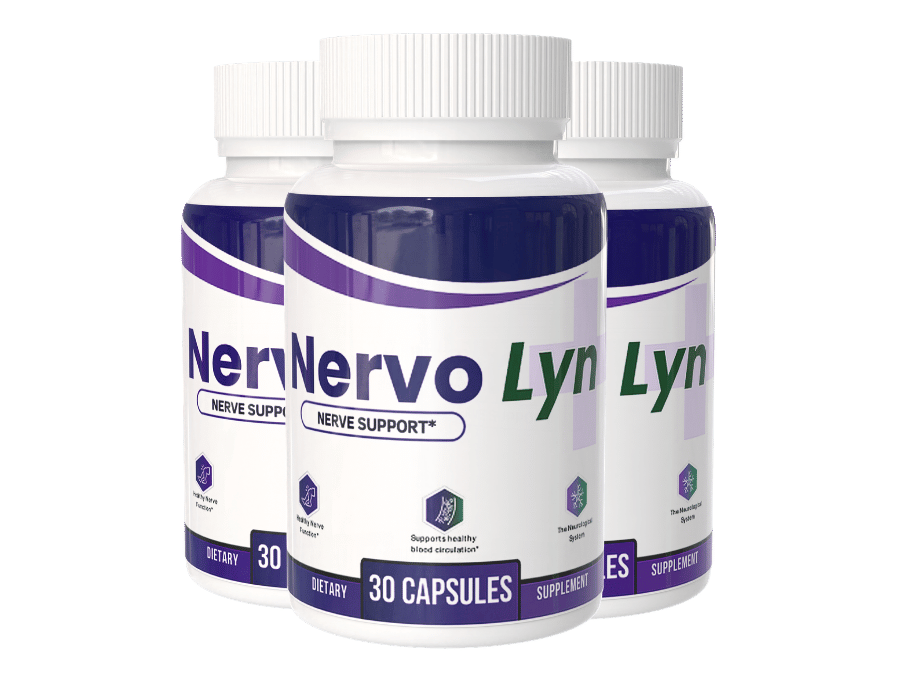
Why so slow? Because none of it is a painkiller, and because of that millimeter a day. If the coating has been thinning for years, the body repairs on its own clock, and the toes are always last in line. The company itself suggests 90 to 180 days of steady use. That's why Del switched to the larger supply after his first bottle: he didn't want to run out right when the slow part started paying off.
If you've been told "maybe" and handed a pamphlet, this is the label Del read at his kitchen table.
See what Arlene left in his mailbox →The whole picture, in one place
What it is: NervoLyn, a once-a-day nerve support capsule: magnesium glycinate (80 mg) plus a blend of alpha lipoic acid, butcher's broom, L-carnitine, turmeric and Coenzyme Q10.
Why Del chose it: it aims at protecting the coating and feeding circulation to the feet, not just quieting the alarm, and his podiatrist was comfortable with it next to his diabetes medicine.
How to use it: one capsule a day with water. Many people notice early changes around weeks 4 to 8; the maker suggests 90 to 180 days before you judge it.
Who it may be for: adults over 50 whose feet burn, tingle, jolt or go numb, especially people whose sugar is improving but whose feet haven't followed, and people who couldn't live with the side effects of nerve pills.
Who should talk to a doctor first: anyone pregnant or nursing, anyone on blood thinners or adjusting insulin, and anyone with an open sore or wound on the foot, which needs medical care first. Sudden numbness or weakness on one side of the body is an emergency, not a supplement question. Never stop a prescribed medicine on your own.
The guarantee: 60 days, money back.
Healing is a race against whatever keeps thinning the coating. Every season you wait, the crust gets a head start.
Give your feet 60 days to answer →P.S. Del still has the search he typed in that parking lot saved on his phone. He says the question was right, he just expected the answer to come from the pamphlet. If you're sitting in your own parking lot asking it, read the label Arlene handed him first. And if your sugar is already in range and the burning still won't let go, Walt's story about what the prescription left out picks up right where this one ends.
Individual results vary. Reader stories reflect personal experiences; names and some details changed for privacy. This is an advertisement and not a news article. Statements have not been evaluated by the FDA. This product is not intended to diagnose, treat, cure or prevent any disease.