
Reader Story
Restless Legs or Neuropathy? Joanne's Doctor Gave Her a Pill for One. Her Feet Were Telling Her About the Other
How to tell the urge to move from the burning and numbness of nerve damage, why both get worse after dark, why so many people have both at once, and what Joanne, 67, heard at Wednesday choir practice.
By the HealthVital editorial team · 8 min read
Joanne, 67, was a school crossing guard in Toledo for twenty-two years. Rain, snow, the orange vest and the stop sign, on her feet at the same corner every morning and every afternoon. She retired two springs ago, and that's about when her legs started acting up at night.
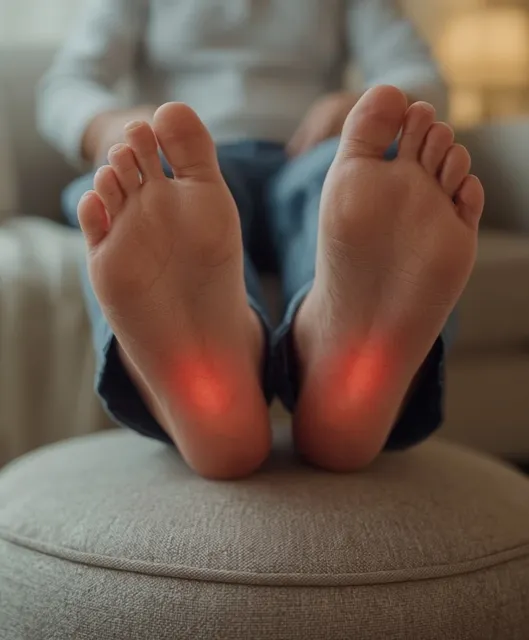
It goes like this. She gets into bed around ten. Within half an hour her legs feel "fizzy," like soda is running through them, and she has to get up and walk to the kitchen and back. Then, once she's lying still again, her feet start to burn. "Two different things," she told us, "or one thing wearing two coats. I honestly can't tell anymore."
Her doctor said restless legs and gave her a prescription. The fizzing got a little better. The burning in her feet didn't change at all. So one night last week, sitting on the edge of the tub at midnight, she typed restless legs or neuropathy into her phone.

Restless legs or neuropathy: how to tell them apart
They share the night shift, which is why they get confused. But they feel different, and the difference matters:
- Restless legs syndrome (RLS) is an urge. A strong need to move the legs, usually with a crawling, pulling or "fizzy" feeling deep inside the legs. It shows up when you sit or lie still, gets worse in the evening, and moving brings relief right away, at least while you keep moving.
- Peripheral neuropathy is a signal problem. Burning, tingling, pins and needles, electric zaps or numbness, usually starting in the toes and soles of both feet. Moving doesn't make it go away. Walking can even make it more noticeable, and the numbness is there in daylight too.
- The test that helps: get up and walk. If the feeling disappears while you walk, that points toward RLS. If your feet still burn or feel like cardboard on the kitchen floor, that points toward the nerves.
- You can have both. Restless legs is more common in people with neuropathy, diabetes, kidney problems and low iron. Treating one doesn't treat the other, which is exactly what happened to Joanne.
Ask your doctor to check iron (ferritin), B12, blood sugar, thyroid and kidney function if you have either. And see a doctor quickly if the numbness spreads fast, is only on one side, or comes with weakness or a sore on your foot you didn't feel.
Joanne tried what everyone tries. It helped, but…
Before she ever went to the doctor, Joanne tried the things her friends swore by. A bar of soap under the bottom sheet (her mother's remedy). Magnesium spray from the health food store. A warm bath before bed. Tonic water, because somebody at church said the quinine helps.
The bath was the best of them. Her legs felt quiet for the first hour of the night. But by two in the morning the burning in her soles was back, and the strip of numbness across her toes never left, bath or no bath. The prescription calmed the fizzing. The feet didn't care.
"The pill is for the part that wants to move," she said. "Nobody's got anything for the part that's on fire."
Why the feet keep burning when the legs calm down
The nerves that run to the toes are the longest in the body, and each one is wrapped in a thin protective sleeve, like the coating on a long electrical cord. When that sleeve wears thin, the signal leaks. Some of it leaks out as burning and buzzing. Some of it never arrives, and that's the numbness.
What wears the sleeve thin is usually slow and quiet: a low-grade inflammation around nerves that are already stressed, and poor blood flow to the far end of the line, where the feet get served last. When the nights turn cold, as they have this week across most of the country, those small vessels in the feet tighten up even more, and the far end of the nerve gets even less.
A restless legs pill works on a different system, in the brain's movement signals. It was never aimed at the sleeve. And there's one ingredient that keeps turning up in the research on that inflammation around the nerve, a common spice, except not in the form you'd buy at the grocery store, it needs a partner to get absorbed, and the time of day seems to matter. Nobody had mentioned any of that to Joanne.
What Gwen said at choir practice
Joanne sings alto in the choir at her Lutheran church, Wednesday nights at seven. Gwen, 71, a retired dental receptionist, sits next to her. Last winter Gwen sang the whole Christmas cantata sitting down, with her shoes off under the chair. Last Wednesday she stood for the full two hours of practice and walked to the parking lot without holding the railing.
So after practice Joanne asked her straight out. "Do your legs still do the thing at night?"
"The fizzing comes and goes," Gwen said. "I've still got my pill for that. It was the feet that were ruining my nights." She'd tried the creams, the soaks and the socks, she said, and what finally changed things was working on the sleeve and the blood flow from the inside, every morning. The following Wednesday she brought the bottle in her purse.
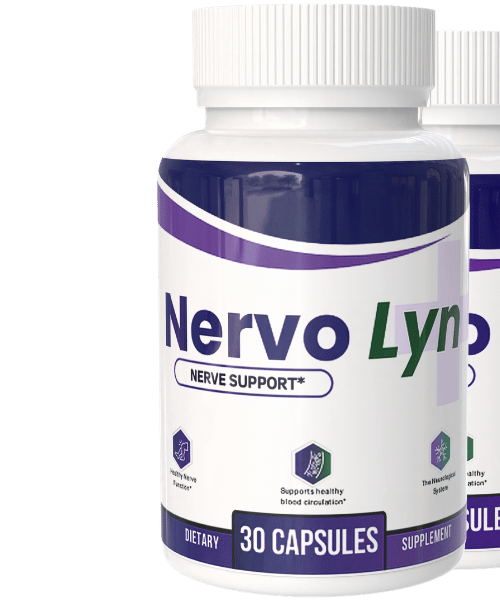
It was NervoLyn. Joanne read the label under the light in the choir room, the way she used to read the fine print on the crossing guard schedule:
- Turmeric extract, standardized to 95% curcuminoids. For the body's normal inflammation response around stressed nerves. "Not the one from the spice aisle," Gwen said.
- Butcher's broom. A traditional herb for circulation, to help blood make the long trip down to the toes on cold nights.
- Alpha lipoic acid. An antioxidant the company describes as one of the most studied for the nerves of the hands and feet.
- Magnesium glycinate. The gentle form, which the company ties to calmer nerve signals and better sleep. "That's the one I was trying to get out of a spray bottle," Joanne said.
- L-carnitine and Coenzyme Q10. Fuel for the cells, so a worn nerve has the energy for its own slow repair.
Joanne did it the careful way. She took the label to her doctor, who checked it against her restless legs pill and her blood pressure pill, told her to take it with breakfast, and said to keep the prescription exactly as it was.
What Joanne is watching for
- Week 1: Nothing different, and Gwen had told her not to expect anything yet.
- Weeks 2-3: Possibly more tingling before less. Gwen said her feet felt "busier" for a while, as if the nerves were waking up. Not everyone notices that.
- Month 1: When Gwen says she stopped putting her feet on top of the covers.
- Months 2-3: Where Gwen is now: two hours standing at practice, shoes on, feeling the risers under her soles.
Why so slow? Because nothing in that bottle numbs or heats anything. A sleeve that wore thin over years gets rebuilt on the body's schedule, and the longest nerves are served last. The company says many people notice early changes in three to four weeks and fuller results over eight to twelve. Joanne ordered the three-month supply. "The Christmas cantata is December 20th," she said. "I'd like to stand for it."
If you're the one getting up at midnight because your legs won't settle, and lying back down to feet that still burn, this is the bottle Gwen brought to choir.
See the label Joanne read in the choir room →Who it's for, and who it isn't
It may be worth a look if you're over 50, the burning, tingling or numbness is in both feet, it's still there when you get up and walk, and your doctor has checked the basics (blood sugar, B12, iron, thyroid). It is not a restless legs treatment, and it doesn't replace one.
It is not for you if the symptoms came on suddenly or only on one side, if a foot or leg feels weak, or if you have a sore that isn't healing. Those need a doctor first. If you take medicine for restless legs, blood sugar, blood pressure, blood thinning, thyroid or nerve pain, have kidney problems, or are pregnant or nursing, show your doctor the label first, and never stop a prescription on your own.
The company offers a 60-day money-back guarantee if your feet don't notice. It's a one-time order with no subscription, made in the United States in a GMP-certified facility. "Sixty days," Joanne said. "That gets me past the cantata."
The nights get longer every week until Christmas, and every cold one is another night the far end of the nerve goes without. Joanne wishes she'd asked Gwen about the shoes under the chair last December.
Give the feet their own answer →So, is it restless legs or neuropathy?
If walking makes it go away, it leans toward restless legs. If your feet still burn, tingle or feel numb while you walk, and in daylight, it leans toward neuropathy. Many people over 60 have both, and the treatment for one doesn't reach the other. Get iron, B12, blood sugar, thyroid and kidneys checked, keep your doctor's prescription as it is, and look at what's happening to the sleeve and the blood flow at the far end of the nerve. Results with any supplement vary from person to person, and Gwen's and Joanne's are their own.
P.S. Last night Joanne slept until 4:10 without getting up. She knows because she wrote it on the calendar, next to "choir 7:00." If you're the one walking to the kitchen and back at midnight, here's what Gwen had in her purse. And if the zaps are what keep you up, read what Doris heard at her book club.
Individual results vary. Reader stories reflect personal experiences; names and some details changed for privacy. This is an advertisement and not a news article. Statements have not been evaluated by the FDA. This product is not intended to diagnose, treat, cure or prevent any disease.