
Reader Story
Electric Shock Feeling in Feet at Night? Doris Woke Up Four Times Before 3 a.m. "Like Somebody Touching a Live Wire to My Toes"
What those sudden zaps in the soles usually mean, why they hit hardest after you lie down, what helps on the bad nights, and what Doris, 70, heard at her library book club.
By the HealthVital editorial team · 8 min read
Doris, 70, was a seamstress in Dayton for forty years, altering wedding dresses and hemming church pants. She has been stuck with more pins than anyone she knows, and she says none of them felt like this. It starts after she's been in bed about an hour: a sharp jolt in the ball of one foot, gone in a second. Then thirty seconds of nothing. Then another one, in the other foot.
"It's like somebody's touching a live wire to my toes and pulling it away," she told us. "Every time I'm about to fall asleep. Four times before three o'clock last night. I finally got up and sat in the kitchen."
At the kitchen table, at 2:40 in the morning, she typed electric shock feeling in feet at night into her phone. Her granddaughter had shown her how to make the letters bigger. She read until it got light.

What causes an electric shock feeling in the feet at night?
Those quick, zapping jolts are almost always a nerve problem, not a muscle or a skin problem. The nerve is firing on its own, without anything touching it. Common reasons:
- Peripheral neuropathy. Damaged nerves in the feet can misfire in bursts, sending shock, stabbing or "zap" signals. Diabetes and prediabetes are the most common causes.
- Low B12, thyroid problems, kidney disease or alcohol can all irritate nerves the same way, and several of those are easy to check with bloodwork.
- A pinched nerve in the lower back or a squeezed nerve near the ankle can send shocks into the foot, usually on one side.
- Some medicines, including certain chemotherapy drugs, can cause it.
- Why night makes it worse: when you lie still in a quiet, dark room, the brain has nothing else to listen to. Cooler bedrooms in the fall tighten the small vessels in the feet, too. Many people say the zaps started the same week the furnace came on.
What helps on the zapping nights
- Keep the room comfortably warm and wear one pair of loose socks. Avoid a hot water bottle or heating pad on feet that can't judge heat well.
- Stretch before bed: ankle circles, toe curls and a slow calf stretch for a few minutes.
- Keep the sheets loose at the foot of the bed so nothing presses on the toes.
- Write it down: what time the zaps come, how often, which foot. That's exactly what a doctor needs to hear.
- Ask your doctor to check blood sugar, B12, thyroid and kidney function, and ask whether a nerve test makes sense.
See a doctor promptly if the shocks are only on one side, come with back pain or weakness in the leg, started suddenly, or come with a sore on the foot you didn't feel.
Doris tried the advice. It helps, but…
Doris attacked it the way she'd attack a torn hem the night before a wedding. She bought a bag of the B12 gummies at the pharmacy. She rubbed a cooling gel on her soles before bed that made her feet smell like a peppermint patty. She stretched in front of the evening news. Her doctor gave her a prescription for nerve pain in September, and it took the edge off the zaps but made her so foggy she pinned a sleeve on inside out. She stopped sewing for church. That was the part that bothered her most.
The gel helped for half an hour. The stretches helped her fall asleep faster. But the zaps still came, somewhere around the first hour of sleep, as regular as a cuckoo clock. "Everything I try is a Band-Aid on the outside," she said. "The wire is on the inside."
She's right, and none of what she tried is wasted. It all works on the end of the line. The jolts are coming from somewhere further up.
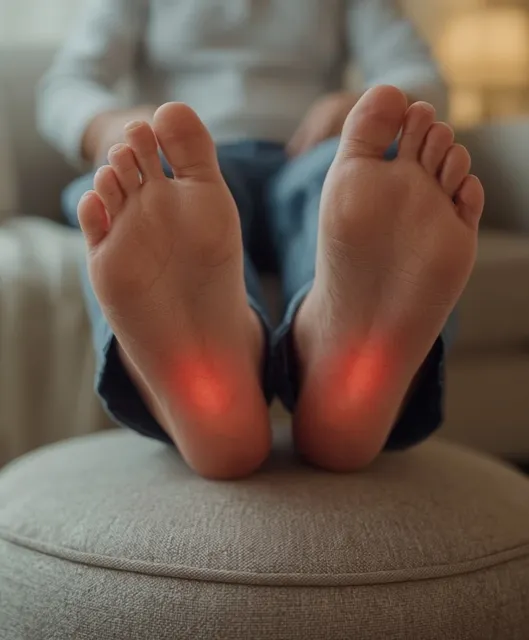
Why a nerve starts sparking by itself
The nerves that run to your toes are the longest in your body, and each one is wrapped in a thin protective coating, like the plastic sleeve on an electrical cord. When that sleeve wears thin in spots, the bare wire underneath starts sparking on its own. That's what a shock in the foot is: a signal that fired with nothing touching the foot at all. Other spots go quiet, which is the numbness that usually comes along with it.
What wears the sleeve thin is usually slow and quiet: a low-grade inflammation around nerves that are already stressed, and poor blood flow to the far end of the line, where the feet get served last. When the weather turns cold, those small vessels tighten and the nerves get even less. And there's a common kitchen spice that keeps showing up in the research on the inflammation side, though not the jar in your cupboard, and not taken the way most people would guess. Which spice, what it has to be paired with, and why the time of day matters, nobody had told Doris.
What Bev said at book club
Doris's book club meets the first Thursday of the month in the back room of the branch library. Bev, 73, a retired school secretary, has been in the group longer than Doris. Two winters ago Bev used to arrive late and leave early, walking with a cane because she couldn't feel where her feet were landing. This October, Doris noticed, Bev was the one carrying the folding chairs back to the closet.
So after the discussion (a mystery none of them liked), Doris asked her straight out. "Do you ever get the shocks? At night?"
"Every night, for two years," Bev said. "I had the gel, I had the gummies, I had the pills that made me forget my own phone number." What finally changed things, she said, was something that worked on the sleeve and the blood flow from the inside every morning, instead of trying to calm the end of the wire every night. At the next meeting she brought the bottle in her tote bag, between the library book and her reading glasses.
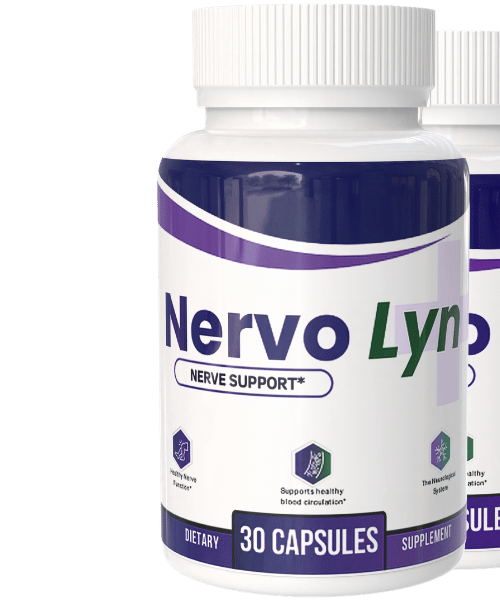
It was NervoLyn. Doris has read a lot of fabric labels in her life, and she read this one twice under the library's fluorescent lights:
- Turmeric extract, standardized to 95% curcuminoids. For the body's normal inflammation response around stressed nerves. "Not the one from the spice aisle," Bev said, and left it at that.
- Butcher's broom. A traditional herb for circulation, to help blood make the long trip down to the toes on cold nights.
- Alpha lipoic acid. An antioxidant the company describes as one of the most studied for the nerves of the hands and feet.
- Magnesium glycinate. The gentle form, which the company ties to calmer nerve signals and better sleep.
- L-carnitine and Coenzyme Q10. Fuel for the cells, so a worn nerve has the energy for its own slow repair.
Doris did it the careful way. She took the label to her doctor, who checked it against her blood pressure pill and the nerve prescription, told her to take it with breakfast, and said they could talk about the prescription dose again in a couple of months, depending on how she felt. "Don't stop anything on your own," he said. She didn't.
What Doris is watching for
- Week 1: Nothing different, and Bev had told her not to expect anything yet.
- Weeks 2-3: Bev said she had a few more tingles before things got quieter. Some people notice a nerve stirring before it settles, though nobody can promise what that means for anyone else.
- Month 1: Bev says that's when she started sleeping through to five.
- Months 2-3: Where Bev is now: no cane, folding chairs, and a full night most nights.
Why so slow? Because nothing in the bottle numbs or cools anything. A sleeve that wore thin over years gets rebuilt on the body's own schedule, and the longest nerves get their turn last. The company says many people notice early changes in three to four weeks and fuller results over eight to twelve. Doris ordered the three-month supply. "I gave the gel a month," she said. "I'll give the wire a whole winter."
If you're the one sitting at the kitchen table at 2:40 in the morning waiting for the next zap, this is the bottle Bev pulled out of her tote bag.
See the label Doris read at the library →Who it's for, and who it isn't
It may be worth a look if you're over 50, the zaps, tingling or burning are in both feet, your doctor has checked the basics, and the gels, gummies and stretches calm the night for a while without ever stopping the shocks.
It is not for you if the shocks are only on one side, came on suddenly, or come with back pain, leg weakness or a foot sore. See a doctor first. If you take medicine for blood sugar, blood pressure, blood thinning, thyroid or nerve pain, have kidney problems, or are pregnant or nursing, show your doctor the label before you start, and never stop a prescription on your own.
The company offers 60 days with your money back if your feet don't notice. It's a one-time order, nothing that renews on its own, made in the United States in a GMP-certified facility. "Sixty days," Doris said. "The gummies came with nothing but a coupon for more gummies."
The nights are only getting longer until Christmas, and every cold one is another night the far end of the nerve goes without. Doris wishes she'd asked Bev about the folding chairs in September.
Give the wire something to rebuild with →So, what does an electric shock feeling in the feet at night mean?
Most often it's an irritated or damaged nerve firing on its own, commonly from neuropathy, and it tends to feel worse when you lie still in a quiet, cool room. Keep the bedroom warm, stretch before bed, keep the sheets loose, track when the shocks come, and ask your doctor to check blood sugar, B12, thyroid and kidney function. One-sided shocks, back pain, weakness or a sore you didn't feel need a doctor soon. Results with any supplement vary from person to person, and Bev's are her own.
P.S. Last Thursday Doris hemmed a pair of church pants for the first time since September. She did it at the kitchen table at nine at night, not 2:40 in the morning, and she says that's progress she can measure. If you're the one with a live wire in your toes every night, here's what Bev had in her tote bag. And if your feet feel icy even when they're warm, read what Shirley asked at water aerobics.
Individual results vary. Reader stories reflect personal experiences; names and some details changed for privacy. This is an advertisement and not a news article. Statements have not been evaluated by the FDA. This product is not intended to diagnose, treat, cure or prevent any disease.