
Reader Story
Neuropathy Symptoms: Peggy Blamed Four of Them on Her Shoes, Her Age and Her Cold Kitchen Floor. Here's What They Were Actually Telling Her
Numb toes, wobbly balance, cold feet in a warm room and little electric zaps at night. Each one had an easy excuse. Together they were one story, and it starts in the longest nerves you have.
By the HealthVital editorial team · 8 min read
Peggy, 66, did a hairdresser's job for thirty-eight years, on her feet ten hours a day in a salon in Dayton, Ohio. So when her toes started going numb, she knew exactly whose fault it was: the shoes. When she got wobbly on the stairs, that was her age. When her feet felt icy in a warm room, that was the tile in her kitchen. And the little electric zaps that woke her at night? Stress, from her husband's surgery. Four neuropathy symptoms, four perfectly good excuses, and two years of explaining them away.
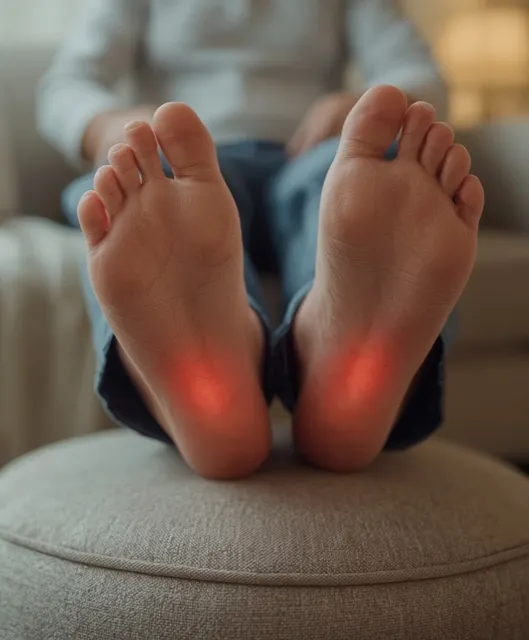
What finally stopped her was a curling iron. She set it on the edge of the counter, it rolled, and it landed against the top of her bare foot. She smelled it before she felt it. "That's when I knew the shoes had nothing to do with it," she told us. That night she searched "neuropathy symptoms" for the first time and read the list like a confession.
The four symptoms Peggy explained away
If any of these sound like you, you're in very large company. Peripheral neuropathy is one of the most common nerve problems in older adults, and it hides well, because every symptom has a believable excuse.
1. "My shoes are too tight." Numb or "asleep" toes
It started in her two smallest toes on the right foot, then the left. A thick, padded feeling, like wearing socks under her skin. She bought wider shoes, then softer ones, then a size up. The numbness didn't care what she wore. That's a clue: numbness from a tight shoe goes away when the shoe comes off. Numbness from a nerve does not, and it tends to show up on both feet, in the toes first.
2. "I'm just getting older." Wobbly balance
Your sense of balance depends on your feet telling your brain where the floor is. When the signal from the soles gets fuzzy, you start leaning on your eyes instead. Peggy noticed she held the railing more, and that she nearly fell in the dark on the way to the bathroom. Getting older doesn't explain needing to look at your feet to know where they are.
3. "The kitchen floor is cold." Icy feet in a warm room
Her husband would be in shorts and she'd be in wool socks. Feet that feel cold when they're warm to the touch are a classic sign that the nerve, not the temperature, is sending the message. (If your feet actually are cold and pale or bluish, that can be a circulation problem, and your doctor should look at it.)
4. "It's stress." Zaps, pins and burning at night
Little jolts, like touching an electric fence, usually right after she lay down. Some nights a hot, sunburned feeling on her soles. Nights are worse for a reason: during the day your brain is busy with a thousand signals, and at night, in the quiet, the misfiring nerve is the loudest thing in the room.
When a symptom can't wait
Please don't read a blog about any of these. Call a doctor today, or go to urgent care, if:
- numbness or weakness came on suddenly, or is on one side of your body only;
- it comes with a drooping face, trouble speaking, or a sudden bad headache;
- you have a cut, blister, burn or sore on your foot that isn't healing, or is red, warm or draining;
- you're losing control of your bladder or bowels.
And if nobody has ever checked your blood sugar, your B12 and your thyroid, start there. Those are three of the most common causes, and two of them are very fixable.
What Peggy tried, and what each one did
Her doctor checked all three. Her sugar was borderline, her B12 low. She started a B12 supplement, cut back on sweets, and got a prescription for the night pain that left her so foggy she called a client by the wrong name. She stopped it after three weeks. Then came the drugstore tour:
- B12: worth doing, since hers was low. Her energy got better. Her toes didn't.
- Menthol cream: a cool, pleasant twenty minutes on burning nights. Then back to normal.
- A heating pad on the soles: felt good, and with numb feet it's a bad idea. One evening she left a red patch she couldn't feel until morning. Don't do this.
- Foot massager from the warehouse store: lovely. Ninety dollars of lovely. No change by morning.
Each of those can make an evening better, and some of them, like fixing a low B12, really matter. But not one of them changed the direction her feet were going. The numbness had climbed from her little toes to the ball of her foot in two years.
What all four symptoms point back to
Here's the picture that made the four symptoms make sense as one. The nerves that run to your feet are the longest in your body, about three feet from spine to toe. Each one is wrapped in a protective coating, like the insulation on an electrical cable. When that coating is whole, signals run clean. When it wears thin, the signal leaks. Too little gets through and you feel numb, wobbly, cold. Too much misfires and you feel zaps and burning. Same cable, same wear, four different symptoms.
That's also why it starts in the toes: the longest cable has the most insulation to lose.
The question Peggy started asking was the one nobody at the drugstore could answer: what is wearing the coating down? Her answer came from her daughter, who sent her a short video presentation by a doctor who has spent close to thirty years with neuropathy patients. As Peggy described it to us, he believes there's a slow process happening right around the nerve, something that eats at that coating the way rust eats metal and leaves a kind of sticky buildup behind. He walks through a cheap morning recipe made from a few kitchen-cabinet ingredients, and he's very particular about one of them: which kind you buy, because the one in most US stores isn't the same, and what time of day you take it. Peggy wouldn't tell us the hour. "He explains it. I'd just mess it up."
That's one doctor's view, and we'll let him explain it. What it changed for Peggy was simple. She stopped treating four symptoms and started looking after one cable.
What was in her client's purse
The last piece came from the salon, where Peggy still works two mornings a week. A longtime client named Lorraine, 72, sat in Peggy's chair for her standing Thursday appointment and noticed Peggy shifting from foot to foot. "Numb?" Lorraine asked. Peggy nodded. Lorraine reached into her purse, the way women in salon chairs do, and pulled out a bottle. "Three years I had that," she said. "Read the back while I'm under the dryer."
The bottle said NervoLyn. Peggy is suspicious of anything that comes out of a purse with that much confidence, so she sat in the next chair over and read the label twice.
- Alpha lipoic acid. The company calls it one of the most studied antioxidants for the nerves in the hands and feet, there to help protect nerve tissue from everyday wear. "That's for the cable," she said.
- Turmeric extract, standardized to 95% curcuminoids. For the body's normal inflammation response around stressed nerves. Not the jar from the spice aisle.
- Butcher's broom. An old herb for circulation, to keep blood flowing all the way to the toes. Peggy liked that one for the cold feet.
- L-carnitine and Coenzyme Q10. Fuel for the cells, the energy a nerve needs for its own slow repair.
- Magnesium glycinate, 80 mg. A gentle form of magnesium the company ties to calmer nerve signals and better sleep.
Lorraine told her she'd been taking it since winter and could feel her house slippers again. Peggy took the label to the doctor who'd checked her B12. He said it wouldn't interfere with anything she was on, told her to keep the B12 going and keep checking her feet. She ordered that week. One capsule a day.

What Peggy noticed, a stretch at a time
- Week 1. Nothing. She kept up the B12 and the menthol cream on bad nights.
- Weeks 2 and 3. A new pins-and-needles feeling in her little toes, and she almost stopped. Lorraine said she'd had it too. Some people notice tingling return to a numb area before more normal feeling comes back, though no one can promise that's what it is.
- Month 1. Two weeks without a zap waking her up. She stopped wearing wool socks to bed.
- Months 2 and 3. She walked down the salon's back stairs without the railing and didn't realize it until she was at the bottom.
Why does it take weeks? Because nothing in it numbs or covers anything. If the coating has been wearing thin for years, the body repairs it on its own schedule, and the longest nerves get their signal back last. The company says most people notice early changes in about three to four weeks and fuller results over eight to twelve weeks of daily use. That's why Peggy, who books her own clients six weeks out, went to the larger supply after her first bottle.
If you've got a good excuse for every one of your symptoms and your feet keep getting quieter anyway, this is the bottle that came out of Lorraine's purse.
See what Lorraine handed Peggy →Who it's for, and who it isn't
It may be worth a look if you're over 50, your symptoms started in your toes on both feet and have been creeping upward, your doctor has checked the basics, and the creams, pads and massagers have helped the evening but never the direction.
See a doctor first, not a blog, for anything on the "can't wait" list above. If you take medicine for blood sugar, blood pressure, blood thinning or nerve pain, or you're pregnant or nursing, show your doctor the label first.
Peggy's reason for saying yes was salon math. Sixty days to find out, with her money back if her feet didn't notice. One order, nothing that renews on its own, made in the United States in a GMP-certified facility. She'd spent more than that on a foot massager she now uses as a doorstop.
Every month the coating keeps wearing is another month of explaining it away. Peggy's only regret is the two years she spent blaming her shoes.
Start your 60 days before the next excuse →So, what are the symptoms of neuropathy?
Most often: numbness or a "padded" feeling in the toes on both feet, burning or electric zaps that are worse at night, feet that feel cold when they aren't, and balance that gets shaky in the dark. Any one of them has an easy excuse. Together they usually tell one story. Get the basics checked, take the "can't wait" list seriously, and check your feet every night. Results vary from person to person, and Peggy's are her own. She still sees her doctor. The curling iron now lives in a holder bolted to the wall.
P.S. Peggy says she's caught four clients so far shifting from foot to foot in her chair. She asks them the same question Lorraine asked her. If you're the one shifting right now, here's the label Peggy read in the next chair over. And if your symptoms have already climbed past the ankle, Hank's story about treatment for neuropathy in legs and feet is the next chapter.
Individual results vary. Reader stories reflect personal experiences; names and some details changed for privacy. This is an advertisement and not a news article. Statements have not been evaluated by the FDA. This product is not intended to diagnose, treat, cure or prevent any disease.