
Reader Story
Is Neuropathy Hereditary? Ron's Father Walked on "Bad Feet" for Thirty Years. Ron Assumed It Was His Turn
Is neuropathy hereditary? Which kinds run in families and which only look like they do, what to ask your doctor, why your father's story doesn't have to be yours, and what Ron, 66, heard from a cousin at the family reunion.
By the HealthVital editorial team · 8 min read
Ron, 66, ran a lathe at a machine shop in Fort Wayne for thirty-eight years. His father worked the same shop before him, and Ron remembers him the way you remember a father: big hands, quiet, and feet that hurt. "Dad called them his bad feet," Ron told us. "Burning at night, numb in the morning. He'd soak them in a dishpan in front of the TV. By seventy he couldn't feel the floor in the kitchen and he fell twice."
Two years ago Ron's own toes started to tingle. Then the burning came at night, in both feet, exactly the way he remembered. "I figured that was it. It's in the blood. My turn." It was his daughter who finally sat down at the computer after Sunday dinner and typed is neuropathy hereditary. "She said, Dad, before you buy a dishpan, let's find out."

Is neuropathy hereditary? What's actually known
The honest answer is: some kinds are, most aren't, and a lot of what looks hereditary is really a family sharing the same risks.
- Some neuropathies are truly inherited. The best known is Charcot-Marie-Tooth disease. It usually shows up early in life, often with high arches, curled toes, thin lower legs and weak ankles, and it tends to appear in several generations. A neurologist can test for it.
- Most neuropathy after 50 is not passed down directly. The most common causes are diabetes and prediabetes, low B12, heavy drinking, thyroid problems, kidney disease, some medicines, and sometimes no cause anyone can find.
- Families share the causes. Type 2 diabetes runs strongly in families. So do eating habits, the same kind of hard physical work, and even the same medicines. A father and son can both get neuropathy for the same reason without a "neuropathy gene" at all.
- Ask for the basic checks. An A1c or fasting glucose, B12 (especially if you take metformin or an acid reducer), thyroid, and kidney function. If symptoms started young, or there are high arches and weak ankles in the family, ask whether a referral to a neurologist and genetic testing make sense.
Get seen quickly if numbness spreads fast, is only on one side, or comes with weakness, falls, a sore you didn't feel, or trouble with your bladder.
Ron did what his father did. It helps, but…
Ron's doctor ran the tests. His A1c was 6.1, in the prediabetes range. His father, it turned out, had been diagnosed with type 2 in his fifties and never talked about it. "So it was in the family," Ron said, "just not the way I thought."
He cut back on the bread and the pop, started walking the dog farther, and, yes, bought a foot soak tub for the TV room. "And the soak feels good. I'll defend that soak to anybody. For about an hour." Then the burning came back at bedtime like it had been waiting outside the door. Everything he'd tried either worked on the evening or worked on the number. None of it reached what was already happening along the nerve.
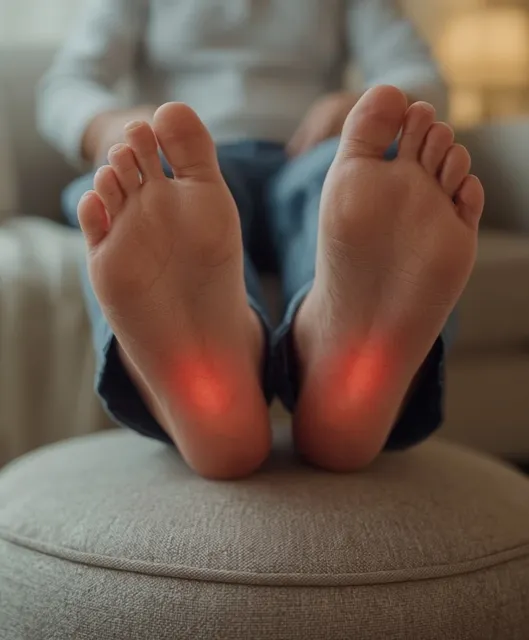
What families pass down, and what they don't have to
Here's the part that changed how Ron thought about it. Whatever starts it, the damage in most neuropathy follows the same road. The nerves that run to the toes are the longest in the body, wrapped in a thin protective sleeve. That sleeve wears thin under two slow pressures working together: a low-grade inflammation around nerves that are already stressed, and poor blood flow to the far end of the line, where the feet get served last. High blood sugar feeds both. So does age. So does cold.
A family can hand down the risk. It doesn't hand down the ending. His father never worked on the sleeve; he only soaked the feet.
And here's something his doctor didn't mention. A spice that's sitting in most kitchen cabinets keeps showing up in the research on that inflammation around the nerve. Not the way it comes in the jar, though. The body barely absorbs it on its own, it needs a partner to get in, and when you take it seems to matter. Which form, with what, and at what time of day, isn't on any family recipe card.
The cousin at the reunion
The answer came from Ron's cousin Darrell, 70, who drove a milk truck for forty years and had the same "bad feet" the men in that family seem to get. At the family reunion in August, Ron watched Darrell play horseshoes barefoot in the grass. "Barefoot," Ron said. "Darrell couldn't feel his own shoes two summers ago."
Darrell said he'd done the soaking too, and the creams, and a pair of shoes that cost more than his first truck. What changed things was working on the nerve every morning, from the inside, for a whole season. He went out to his pickup and came back with a bottle from the glove box.
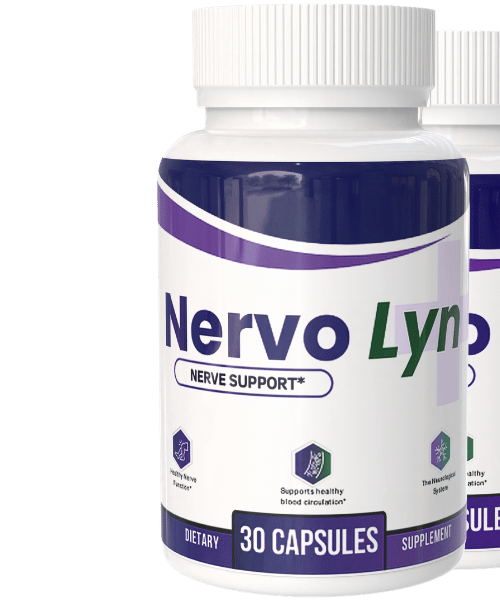
It was NervoLyn. Ron read the label like a work order, every line:
- Turmeric extract, standardized to 95% curcuminoids. For the body's normal inflammation response around stressed nerves. "That's the spice," Darrell said. "Not the stuff in Aunt June's cabinet."
- Butcher's broom. A traditional herb for circulation, to help blood reach the toes.
- Alpha lipoic acid. An antioxidant the company describes as one of the most studied for the nerves of the hands and feet.
- Magnesium glycinate. The gentle form, which the company connects with calmer nerve signals and better sleep.
- L-carnitine and Coenzyme Q10. Fuel for the cells, so a worn nerve has the energy for its own slow repair.
Ron did it the careful way. He took a photo of the label to his doctor, who checked it against his blood pressure pill, told him to take it with breakfast, and to keep working on the A1c, because that part doesn't take care of itself.
What Ron is watching for
- Week 1. Nothing, and Darrell told him not to expect anything. "This isn't the soak."
- Weeks 2 and 3. Darrell warned him the tingling might feel busier for a while. Some people notice a nerve wake up before it settles, though no one can promise how it goes for anyone else.
- Month 1. That's when Darrell says the bedtime burning stopped showing up every night.
- Months 2 and 3. Where Darrell is now: barefoot in the grass, feeling it.
Why so slow? Because nothing in the bottle numbs or heats anything. A sleeve that wore thin over years gets rebuilt on the body's schedule, and the longest nerves get their turn last. The company says many people notice early changes in three to four weeks and fuller results over eight to twelve. Ron ordered the three-month supply. "My father had thirty years to fix this and didn't," he said. "I can give it three months."
If you've been watching your feet turn into your mother's or your father's, and the soak only buys you an evening, this is the bottle Darrell brought in from his glove box.
See the label Ron read at the reunion →Who it's for, and who it isn't
It may be worth a look if you're over 50, the tingling, burning or numbness is in both feet, your doctor has checked the basics, and what you've tried helps for an evening without changing the nights. It's not for an inherited neuropathy like Charcot-Marie-Tooth, which needs a neurologist. It's not for symptoms that came on suddenly, only on one side, or with weakness or a sore that won't heal; those need a doctor first. If you take medicine for blood sugar, blood pressure, blood thinning, thyroid or nerve pain, have kidney problems, or are pregnant or nursing, show your doctor the label first, and never stop a prescription on your own.
The company gives you 60 days, with your money back if your feet don't notice. It's a one-time order, nothing that renews on its own. "Sixty days," Ron said. "That's past Christmas. If I can stand at the grill on New Year's without shifting foot to foot, I'll know."
Your family's story can be the warning instead of the ending. Ron's daughter is the one who made him look. Maybe this is your daughter asking.
Write a different ending than your father's →So, is neuropathy hereditary?
A few types are, and they usually show up young, with high arches and weak ankles running through the family. Most neuropathy after 50 isn't inherited directly, but families share the things that cause it, above all type 2 diabetes and prediabetes. Get the basic tests, ask about genetic testing if the pattern fits, and know that the family risk is not the family ending. The worn sleeve along the nerve and the weak blood flow beneath it are what most people can still work on. Results with any supplement vary from person to person.
P.S. Ron put the foot soak tub in the garage last weekend, next to his father's old toolbox. He says he's not throwing it out, he just doesn't want to need it. If you're the one assuming it's your turn, here's what Darrell keeps in his glove box. And if your feet start up the minute you get into bed, read why feet get pins and needles when you lie down.
Individual results vary. Reader stories reflect personal experiences; names and some details changed for privacy. This is an advertisement and not a news article. Statements have not been evaluated by the FDA. This product is not intended to diagnose, treat, cure or prevent any disease.