
Reader Story
Heating Pad for Neuropathy? Earlene Put One Under Her Feet the First Cold Night. She Didn't Feel the Blister Until Morning
Is a heating pad safe when your feet are numb? Why heat feels so good and can hurt so quietly, how to warm cold neuropathy feet safely this winter, and the question Earlene, 70, asked after the blister healed.
By the HealthVital editorial team · 8 min read
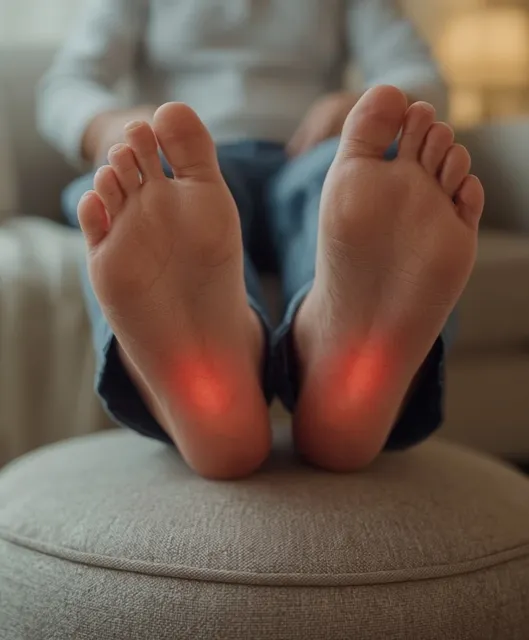
Earlene, 70, kept the books for a family hardware store in Muncie for thirty-eight years. She is practical down to her bones. So the first night this October that the temperature dropped into the thirties and her feet went from numb to ice-cold-and-burning at the same time, she did the practical thing. She dug the old heating pad out of the hall closet, set it on medium, slid it under her feet on top of the blanket, and fell asleep watching the late news.
In the morning there was a blister on her left heel the size of a quarter. She never felt it happen. "Not a thing," she told us. "I slept like a baby. That's what scared me."
Her daughter, a nurse in Indianapolis, made her promise to look it up before she used it again. So Earlene typed heating pad for neuropathy into her phone at the kitchen table, a bandage on her heel and a cup of coffee going cold next to her.

Is a heating pad safe for neuropathy?
Warmth can feel wonderful on cold, aching feet, and it's easy to see why people reach for it the moment the furnace kicks on. But this is the part that surprises a lot of people: when nerves in the feet are damaged, they often lose the ability to tell how hot something is. Your foot can be getting burned while your brain is getting the message "nice and toasty," or no message at all. Doctors who treat diabetic feet see burns from heating pads, hot water bottles, space heaters and hot foot soaks every winter, often in people who never felt a thing.
If your feet are numb, tingling or burning, the safer ways to warm them:
- Skip heating pads, electric blankets and hot water bottles directly on the feet, especially while you sleep. If you use one anyway, keep it on low, put two layers between it and your skin, and never fall asleep on it.
- Warm the bed, not the feet. Run an electric blanket for twenty minutes before bed, then switch it off before you get in.
- Wear loose wool or thermal socks to bed, without tight bands at the top.
- Test bath and soak water with your elbow or a thermometer, never with your feet. Lukewarm, around body temperature, is plenty.
- Keep your feet away from space heaters and fireplaces.
- Look at your feet every night, top and bottom, with a mirror if you need one. A blister you can't feel is still a blister.
Call a doctor the same day if a blister or sore on your foot is red, warm, swollen, draining or not healing, and especially if you have diabetes. Small foot wounds can turn serious fast when the nerves aren't sounding the alarm.
What Earlene did. It helped, but…
Earlene took her daughter's advice to the letter. Heating pad back in the closet. Wool socks. Electric blanket on for twenty minutes, off before bed. She checks her heels with a hand mirror every night now, which she says makes her feel "like a dentist."
The heel healed in about three weeks. And her feet are safer. But they are still cold and numb at the same time, the burning still comes up around ten at night, and now she doesn't even have the heating pad to take the edge off. "So I'm safe," she said. "Safe and freezing. Nobody told me what to do about why my feet can't tell hot from cold in the first place."
Why your feet can't feel the heat
That's the right question, and the quick answers mostly skip it. The nerves that run all the way down to your toes are the longest in your body, and each one is wrapped in a thin protective coating, a bit like the insulation around the wires in an old lamp cord. When that coating wears thin, the signals coming up from the foot get scrambled. Some leak out as burning and buzzing. Some, like the "this is too hot" signal, simply never arrive.
The way it was explained to Earlene, two slow things wear that coating down together: a quiet, low-grade inflammation around nerves that are already under stress, and poor blood flow to the very end of the line, where the feet get served last. Cold weather makes the second one worse, because the small vessels in the feet tighten up. That's why so many people's feet feel coldest and most numb in exactly the months when they're most tempted to grab a heating pad.
There's a kitchen spice that keeps turning up in the research on the inflammation part. But the jar in your cupboard is not the version that was studied, and on its own the body barely absorbs it. Which spice, what it has to be taken with, and why the time of day seems to matter, Earlene had never heard from her pharmacist, her podiatrist or the internet. Neither had we, until her story came in.
The woman at the hardware store
A few days after the blister, Earlene stopped by the old store to see her nephew, who runs it now. A customer she'd known for years, a woman named Darlene, seventy-three, a retired school cook, was buying a space heater. Earlene, still on her mission, told her not to put her feet anywhere near it and showed her the bandage.
Darlene laughed and said she'd done the exact same thing two winters ago. "Burned the side of my foot on a hot water bottle. Didn't feel it till I saw the sock." She said what changed things for her wasn't another way to warm her feet. "I quit trying to warm them from the outside and started on something for the wiring and the blood flow from the inside." She dug in her purse and set a bottle on the counter, next to the register Earlene used to run.
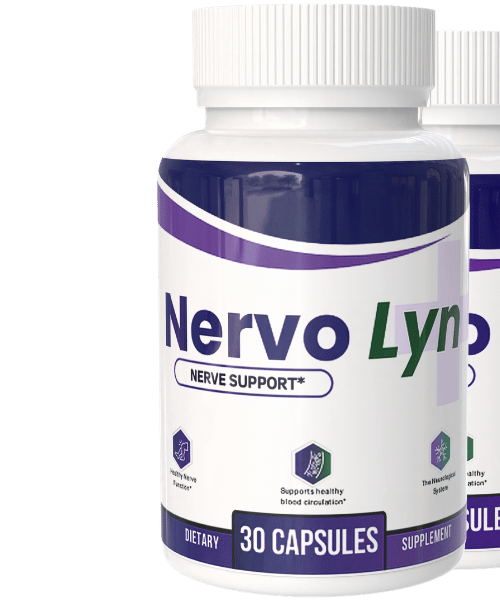
It was NervoLyn. Earlene spent four decades reading invoices line by line, and she read the back of that bottle the same way:
- Turmeric extract, standardized to 95% curcuminoids. For the body's normal inflammation response around stressed nerves. "So that's the spice," Earlene said. Darlene just nodded.
- Butcher's broom. A traditional herb for circulation, to help warm blood make the long trip down to the toes.
- Alpha lipoic acid. An antioxidant the company describes as one of the most studied for the nerves of the hands and feet.
- L-carnitine and Coenzyme Q10. Fuel for the cells, so a tired nerve has the energy for its own slow repair.
- Magnesium glycinate. A gentle form of magnesium the company connects with calmer nerve signals and better sleep.
Earlene did it the careful way. She called her daughter first, then took the label to her doctor, who checked it against her blood pressure medicine and her cholesterol pill, told her to take it with breakfast, and told her the heating pad stays in the closet either way.
What Earlene noticed, and when
- Week 1. Nothing worth reporting. Same cold, same ten o'clock burn.
- Weeks 2 and 3. A tingle in her toes in the shower that she hadn't felt in a long time. Darlene said she'd had that too. Some people notice a nerve stir before it settles, though nobody can promise what it means for anyone else.
- Month 1. She noticed the bathwater was a little too warm before she got in, with her hand, and then, faintly, with her foot. She sat on the edge of the tub for a minute.
- Months 2 and 3. Where Darlene is now: she says her feet feel "like they're on the same team as the rest of me again." Earlene has a January checkup and plans to show her doctor her heels.
Why so slow? Nothing in that bottle numbs or heats anything. A coating that wore thin over years gets rebuilt on the body's own timetable, and the longest nerves, the ones in the feet, get their turn last. The company says many people notice early changes in three to four weeks and fuller results over eight to twelve. Earlene ordered the three-month supply. "That gets me to spring," she said. "That's the whole cold season."
If your feet are cold, numb and burning at the same time and you've already learned not to trust a heating pad, this is the bottle Darlene set on the counter.
See the label Earlene read at the register →Who it may suit, and who it doesn't
It may be worth a look if you're over 50, the numbness, tingling or burning is in both feet, your doctor has checked the basics (blood sugar, B12, thyroid), and the socks, the warm bed and the creams make winter easier without ever giving the feeling back.
It is not for you if the symptoms came on suddenly or only on one side, if a foot or leg feels weak, or if you have a wound that isn't healing. Those need a doctor first. If you take medicine for blood sugar, blood pressure, blood thinning or nerve pain, or are pregnant or nursing, show your doctor the label before you start, and never stop a prescription on your own.
The company gives you 60 days, with your money back if your feet don't notice. It's a one-time order, nothing that renews behind your back, made in the United States in a GMP-certified facility. "Sixty days," Earlene said. "Longer than that blister took to heal."
Every cold night your feet can't feel the heat is a night they can't warn you either. Earlene wishes she'd asked the "why" question before the blister, not after.
Start your 60 days before the first freeze →So, can you use a heating pad with neuropathy?
It's safest not to put one directly on numb feet, and never to sleep on one. Warm the bed instead of the feet, wear loose wool socks, test water with your hand or a thermometer, keep feet away from heaters, and check them every single night. What none of that does is fix the reason your feet can't feel the heat. Talk to your doctor about the cause and about what else could help. Results with any supplement vary from person to person, and Earlene's are her own. She still sees her doctor, and the heating pad is still in the closet.
P.S. Earlene gave the heating pad to her nephew for the store's back office, where it now warms a very spoiled cat. If you're the one sitting at your own kitchen table with a bandage on your heel and no idea how it got there, here's what Darlene pulled out of her purse. And if your morning laps at the mall leave your feet feeling borrowed, read what happened to Loretta this month.
Individual results vary. Reader stories reflect personal experiences; names and some details changed for privacy. This is an advertisement and not a news article. Statements have not been evaluated by the FDA. This product is not intended to diagnose, treat, cure or prevent any disease.