Reader Story
Do Compression Socks Help Neuropathy? Glenn Wore Them Every Day for a Year. Here's What They Fixed, and What They Couldn't Touch
His ankles stopped swelling. His legs felt less heavy. And his toes still felt like they belonged to someone else. The difference between a circulation problem and a nerve problem is the whole story.
By the HealthVital editorial team · 8 min read
Glenn, 64, typed "do compression socks help neuropathy" into his phone sitting on a tailgate at a trailhead in eastern Oregon. He had just turned back two miles short of a lake he'd hiked to every September for thirty years, because he couldn't feel where his boots were landing on the loose rock. His toes were numb. The soles burned. And a man at the sporting goods store had told him, with total confidence, that compression socks would "get the blood moving and wake those feet right up."

He bought three pairs that afternoon. He wore them every single day for the next year, hiking, mowing, even under his jeans at church. And because he is a retired surveyor, a man who measures things for a living, he kept track of what they did.
"They did something," he told us. "Just not the thing I bought them for."
What compression socks actually do
Let's be fair to the socks first, because they're a good tool for the right job. Compression socks squeeze the lower leg, firmest at the ankle and a little looser up the calf. That gentle pressure helps the veins push blood back up toward the heart instead of letting it pool in the feet and ankles. That's why doctors often recommend them for swelling, varicose veins, long flights and people who stand all day.
So if your neuropathy comes with swollen ankles, heavy, achy legs at the end of the day, or feet that look puffy by dinner, compression socks may make you more comfortable. Some people with neuropathy say the steady, even pressure itself feels soothing, a little like a firm hand on a jittery muscle.
Glenn's list, after a year:
- Ankle swelling: gone by the second week. "That part was real."
- Heavy legs after mowing: noticeably better.
- Calf cramps at night: a little less often, maybe.
- Numb toes: no change.
- Burning soles at bedtime: no change. Some nights worse, because the socks felt too warm and he peeled them off at 2 a.m.
- Feeling the ground on the trail: no change.
A word of caution before you buy a pair
Compression isn't right for everyone. If you have poor circulation from narrowed arteries (doctors call it peripheral artery disease), squeezing the leg can make things worse, and it's more common than people think in folks with diabetes. If your feet are numb, you also may not feel a sock that's too tight, a seam rubbing a blister, or skin breaking down underneath. Ask your doctor which strength is safe for you, start with light compression, put them on in the morning, take them off at night, and look at your feet when they come off.
Why the sock never reached the numbness
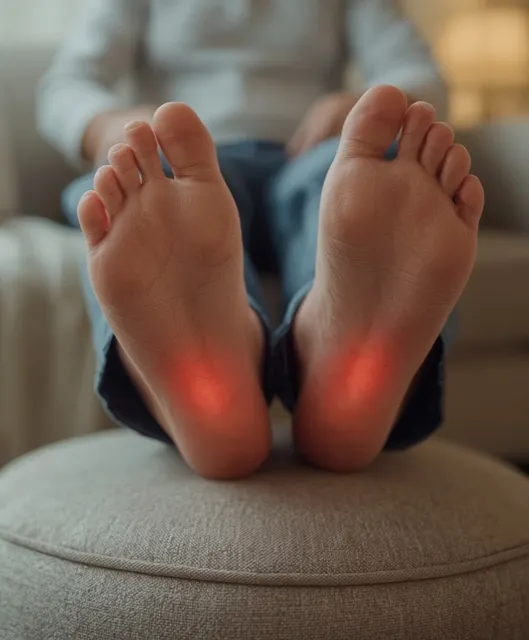
Here's the part the man at the sporting goods store skipped. Swelling and heavy legs are mostly about blood and fluid. Numb, burning, buzzing feet are usually about the nerve itself.
The nerves that run to your feet are the longest in your body, and each one is wrapped in a protective coating, the way an electrical cable is wrapped in insulation. When that coating is whole, signals move cleanly, and you feel the rock under your boot. When it wears thin, the signal leaks. Too little gets through and you feel numb. Too much gets through and you feel burning and electric zaps. The longest nerves have the most coating to lose, which is why it starts in the toes and climbs.
A sock presses on the outside of the leg. The coating is deep inside, wrapped around the nerve. Better blood flow is good for every tissue in the body, but it doesn't explain why the coating was wearing down in the first place.
That's the question Glenn finally started asking: not "how do I get more blood down there," but "what is eating the insulation?"
The video his daughter sent
His daughter, a dental hygienist in Boise, sent him a link one Sunday night with a single line: "Dad, watch this before you buy a fourth pair." It was a presentation from a doctor who has spent almost three decades with neuropathy patients.
As Glenn describes it, the doctor's view is that a slow process around the nerve, one enzyme getting out of balance, chews at that protective coating the way rust works through metal, and leaves a sticky buildup behind. Most remedies, in his view, aim at the feeling or at the blood flow and stop short of the coating itself. He also walks through a cheap morning recipe made from a few kitchen ingredients, and he's particular about which kind of one of them and what hour you take it. Glenn wouldn't tell us more. "It's his to explain, and he does a better job than a surveyor would."
That's one physician's view, and we're reporting what Glenn took from it, not endorsing a theory. But it changed what Glenn went looking for.
What turned up in the truck at the trailhead
A few weeks later Glenn was back at the same trailhead, this time just walking the flat first mile, and he got to talking with another hiker loading up his truck. A retired forester named Russ in his early seventies, saw the compression socks peeking out of Glenn's boots and laughed. "Did those for two years," he said. "Great for the ankles. Did nothing for the toes."
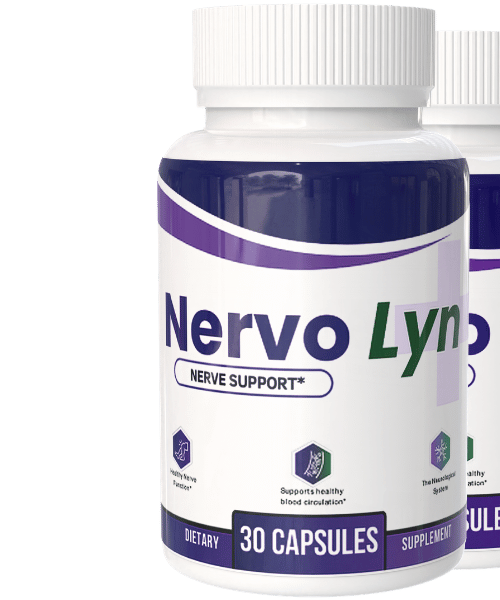
Then he reached into the cup holder of his truck and held up a bottle. NervoLyn. "This is what I take for the toes."
Glenn does not buy things from strangers in parking lots. He took a picture of the label, drove home, and read it at the kitchen table with his surveyor's magnifier.
- Alpha lipoic acid. The company calls it one of the most studied antioxidants for the nerves in the hands and feet, to help protect nerve tissue from everyday wear. "That's the rust question," Glenn wrote in the margin.
- Turmeric extract, standardized to 95% curcuminoids. For the body's normal inflammation response around stressed nerves.
- Butcher's broom. An old circulation herb, to help blood reach all the way to the feet. "So the socks' job, from the inside."
- L-carnitine and Coenzyme Q10. Cellular fuel, the energy a nerve needs for its own repair work.
- Magnesium glycinate, 80 mg. A gentle form of magnesium tied to calmer nerve signals and better sleep.
He showed the label to his doctor, who said it wouldn't interfere with his blood pressure pill and to keep his appointments. One capsule a day. He kept the socks for the ankles.
How the months went
- Week 1. Nothing to report, and he reported it anyway, in a little spiral notebook.
- Weeks 2 and 3. A strange new prickling in the balls of his feet that made him nervous. Some people notice tingling come back into a numb area before more normal feeling returns, though nobody can promise that's what it is.
- Month 1. The 2 a.m. burning started showing up later, and two nights in a row it didn't show up at all.
- Months 2 and 3. He walked the first four miles of the lake trail and could tell, through the boot, which rocks were loose. He turned back at mile four on purpose this time, "saving the lake for next September."
Why does it take weeks? Because nothing here numbs anything. If a coating has been thinning for years, the body repairs it on its own schedule, and the longest nerves get their signal back last. The company says most people notice early changes in about three to four weeks and fuller results over eight to twelve weeks of daily use. That's why Glenn, who never walks half a survey line, went to the larger supply after his first bottle.
If your ankles feel better in the socks but your toes still can't find the floor, this is the bottle that was sitting in Russ's cup holder.
See what was in the cup holder →Who it's for, and who it isn't
It may be worth a look if you're over 50, the numbness, tingling or burning began in your toes and has been creeping upward, your doctor has checked the basics, and socks, soaks and creams have helped the legs or the evening but never the toes themselves.
See a doctor first, not a blog, if the numbness came on suddenly, is on one side, comes with weakness, a drooping face or trouble speaking, or you have a foot sore that isn't healing. If your blood sugar, B12 and thyroid have never been checked, start there. And if you take medicine for blood sugar, blood pressure, blood thinning or nerve pain, or you're pregnant or nursing, show your doctor the label first.
Glenn's reason for saying yes was surveyor's math. Sixty days to find out, with his money back if his feet didn't notice. One order, nothing that renews on its own, made in the United States in a GMP-certified facility. He'd already spent more than that on three pairs of socks, a foot massager and two kinds of cream.
Every month the coating keeps thinning is another month the trail gets shorter. Glenn's only regret is the year he spent squeezing the outside of a problem that lived inside.
Start your 60 days before next September →So, do compression socks help neuropathy?
They can help with swelling, heavy legs and comfort, and if your doctor says they're safe for you, they're worth keeping. What they don't do is reach the coating around the nerve, which is where numb and burning feet usually begin. Results vary from person to person, and Glenn's are his own. He still wears the socks on long days, still checks his feet every night, and still sees his doctor. But the spiral notebook has a new first page: "Socks for the ankles. Something else for the cable."
P.S. Glenn ran into Russ at the trailhead again last week and showed him the notebook. Russ just pointed at the glove box and grinned. If you're the one reading this with compression socks on right now, here's the label Glenn read with his magnifier. And if your numbness has already climbed past the ankle, Hank's story about treatment for neuropathy in legs and feet is the other half of this one.
Individual results vary. Reader stories reflect personal experiences; names and some details changed for privacy. This is an advertisement and not a news article. Statements have not been evaluated by the FDA. This product is not intended to diagnose, treat, cure or prevent any disease.