
Reader Story
Can You Drive With Neuropathy in Your Feet? Dolores Pressed the Brake at the Stop Sign and Her Foot Never Told Her It Got There
What doctors look at before they say yes, the simple checks you can do in your own driveway, and why Dolores, 66, says the clocks falling back this weekend finally made her deal with the numbness instead of driving around it.
By the HealthVital editorial team · 8 min read
Dolores, 66, drove a delivery route for a florist in Tucson for eighteen years. Weddings, funerals, the Valentine's Day rush, all of it in a white van with a sticky clutch. She is the person her whole family calls when somebody needs a ride to the airport at four in the morning. So she didn't say anything to anybody when, back in the spring, her feet started feeling like they were wrapped in a thick pair of wool socks she couldn't take off.
Then one evening in September, coming home from her sister's, she rolled up to the four-way stop on her own street, pressed the brake, and felt nothing. Not the pedal, not the pressure, nothing. The car stopped. She just didn't feel her foot make it happen. She sat there with her hands on the wheel until the car behind her honked.
That night she typed can you drive with neuropathy in your feet into her phone, and then sat on the edge of the bed for a long time without reading any of the answers.

Can you drive with neuropathy in your feet? The honest answer
Many people with neuropathy drive safely for years. There's no single rule that says you have to stop. What matters is whether you can still feel the pedals well enough, move your foot between them quickly, and judge how hard you're pressing. Doctors, and in some states the licensing office, look at the person, not the diagnosis.
Questions worth asking yourself honestly:
- Can you feel the gas and brake pedals through your usual shoes, or do you look down to check where your foot is?
- Have you ever pressed harder or softer than you meant to, or caught your foot on the edge of the pedal?
- Is it worse at the end of the day, or after you've been sitting a long time?
- Do you also have cramping, weakness, or trouble with balance when you step out of the car?
If any of those are a yes, it's time to talk to your doctor, and ask whether an occupational therapist can do a driving evaluation. Many hospitals have one. It isn't a test you fail. It's how people keep driving, often with small changes like thin-soled driving shoes, a wider brake pedal, or avoiding night driving for a while.
Stop driving and get seen right away if your feet have suddenly gotten worse, if a leg feels weak, or if you've had a near miss because you couldn't feel a pedal.
Why it gets scarier after the clocks fall back
This Sunday, November 1, the clocks go back an hour, and for most of us the drive home from errands is suddenly in the dark. Dolores noticed it before anybody told her: her feet were always worse in the evening. That isn't your imagination. After a long day, tired nerves send weaker signals, and in the dark you lean on your feet more because you can't see as well. Less light, less feeling, less room for error.
So she made herself a rule. No driving after dark until she knew what was going on. "Do you know how early it gets dark in November?" she said. "That rule took away half my life."
What Dolores tried first. It can help, but…
Her doctor checked the usual: her A1c was 6.8, her B12 was on the low side, her thyroid was fine. He started her on B12 and told her to walk. She did. She bought the thin-soled driving moccasins the occupational therapist recommended. She tried a TENS machine her neighbor lent her, soaked her feet in Epsom salt, and rubbed in a lidocaine cream before every drive.
All of those can help. The moccasins especially; she could feel the brake a little better in them. But six weeks in, the wool-sock feeling was the same, and every evening the numbness crept a little higher toward her ankles.
"Everything I tried was working around my feet," she told us. "Nothing was working on them."
What the quick answers don't tell you
Every nerve running down to your toes is wrapped in a thin protective coating, a little like the insulation on a wire. When that coating thins, the message from your foot to your brain arrives late, weak, or not at all. That's the moment at the stop sign: the foot pressed, the signal just never made it home.
The way it was explained to Dolores, the coating wears down from two directions at once: a slow, quiet inflammation around nerves that are already stressed, and poor blood flow to the far end of the leg, which starves the coating of what it needs to repair. Address one and ignore the other, and a lot of people get stuck right where Dolores got stuck.
And there's an inexpensive kitchen spice that keeps showing up in the research on that inflammation. Which one, what it needs alongside it for the body to actually absorb it, and why timing seems to matter: that's the part nobody had told her.
The woman at the next pew
It was a Sunday in early October. Dolores had asked her grandson to drive her to church, which she'd never done in her life. After the service a woman named Inez, who sits one row back, asked her why she wasn't driving. Dolores told her, quietly, about the stop sign.
Inez nodded like she'd heard it before. "My feet were like that two years ago," she said. "I quit driving to my sister's in Phoenix. Then my daughter found me something that went after the nerve coating and the circulation together." She dug in her bag and set a bottle on the pew between them.
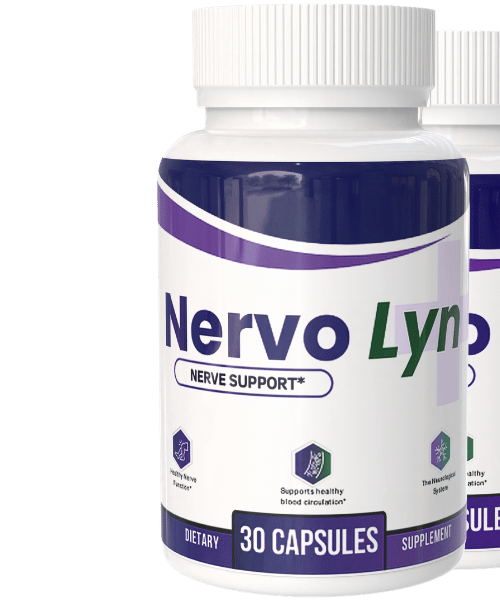
It was NervoLyn. Dolores read the back of it right there, holding it under the light from the stained-glass window:
- Turmeric extract, standardized to 95% curcuminoids. For the body's normal inflammation response around stressed nerves. "So that's the spice," she said.
- Butcher's broom. A traditional herb for circulation, to help blood make the long trip down to the feet.
- Alpha lipoic acid. An antioxidant the company describes as one of the most studied for the nerves in the hands and feet.
- L-carnitine and Coenzyme Q10. Fuel for the cells, so a tired nerve has energy for its own slow repair.
- Magnesium glycinate. A gentle form of magnesium connected with calmer nerve signals and better sleep.
"The circulation part," Dolores said. "Nobody had said a word to me about blood getting to my feet." She showed the label to her doctor first, because of her blood pressure pill and the B12. He said to take it with breakfast, keep the B12, keep walking, check her feet every night, and do the driving evaluation anyway.
What Dolores noticed, and when
- Week 1. Nothing she'd swear to. Same wool socks, same rule about the dark.
- Weeks 2 and 3. A warm prickling in her toes some evenings, where there used to be nothing. Inez said she'd felt it too. Some people notice a quiet spot stirring before it settles, though nobody can promise what it means.
- Month 1. At the four-way stop, she felt the pedal. Not perfectly. But she felt it.
- Months 2 and 3. Where Inez is now: driving to her sister's in Phoenix again, two hours each way, home before dark by choice, not by fear.
Why so slow? Because nothing in that bottle numbs anything. A coating that has been thinning for years gets rebuilt on the body's own schedule, and the longest nerves, the ones to your toes, get their turn last. The company says many people notice early changes in three to four weeks and fuller results over eight to twelve. Dolores went with the three-month supply. "Winter's long," she said. "I want my evenings back before Christmas Eve service."
If you've started looking down at your feet to find the brake, this is the bottle Inez set on the pew.
See the label Dolores read in the church light →Who it may suit, and who it doesn't
It may be worth a look if you're over 50, the numbness, tingling or burning started in the toes of both feet and has slowly moved up, your doctor has checked your blood sugar, B12 and thyroid, and the creams, soaks and devices help for a while but not for good.
It is not for you if your symptoms came on suddenly or are on one side only, if a leg is weak, if you have a sore on your foot that isn't healing, or if you've already had a close call at the wheel. Those need your doctor now. If you take medicine for blood sugar, blood pressure or blood thinning, are in cancer treatment, or are pregnant or nursing, show your doctor the label first, the way Dolores did. And a supplement is never a reason to skip a driving evaluation.
The company gives you 60 days, with your money back if your feet don't notice. It's a one-time order, nothing that renews automatically, made in the United States in a GMP-certified facility. "Sixty days gets me to New Year's," Dolores said. "If I still can't feel the brake by then, it goes back."
The evenings only get longer from here, and every month the coating keeps thinning, the numbness climbs a little higher. Dolores's one regret is the summer she spent driving around it.
Start your 60 days before the dark drives start →So, can you drive with neuropathy in your feet?
Often, yes, if you can still feel the pedals, move between them quickly and control how hard you press. Be honest about the warning signs, talk to your doctor, ask about a driving evaluation, wear thin-soled shoes, and skip night driving when your feet are at their worst. Get seen right away for sudden changes, weakness, or a near miss. Results with any supplement vary from person to person, and Dolores's are her own.
P.S. Last Sunday Dolores drove herself to church for the first time in two months, and she drove Inez home after. "I felt that stop sign," she texted us. "Felt it." If you're sitting in your own driveway tonight not quite trusting your right foot, here's what Inez brought to church. And if your balance has started to slip too, read what we wrote about neuropathy and balance next.
Individual results vary. Reader stories reflect personal experiences; names and some details changed for privacy. This is an advertisement and not a news article. Statements have not been evaluated by the FDA. This product is not intended to diagnose, treat, cure or prevent any disease.