
Reader Story
Can Neuropathy Cause Balance Problems? Walt Missed the Last Porch Step He'd Climbed for Forty Years. His Feet Never Told Him It Was There
He blamed his knees, then his glasses, then the step. Why numb feet can make you unsteady long before they hurt, the simple checks that tell you if it's happening to you, and what his son found after the second fall.
By the HealthVital editorial team · 8 min read
Walt, 70, a retired lineman from Abilene, Texas, had walked up the same four porch steps since 1985. One evening in August, carrying a bag of feed corn for the birds, he put his right foot down where the top step should have been, and it wasn't there. He went down on one knee and both hands. The bag split. His wife found him sitting in a fan of corn, more embarrassed than hurt. "I didn't trip," he kept saying. "I just didn't know where my foot was."
That sentence is the whole story, and it's the reason so many people end up typing can neuropathy cause balance problems? into their phones after a fall they can't explain. The answer is yes, and it often happens before the burning or tingling gets bad enough to send you to a doctor.
Can neuropathy cause balance problems? Yes, and here's how
Staying upright is a three-way conversation. Your eyes tell your brain where the floor is. Your inner ear tells it which way is up. And the nerves in the soles of your feet and ankles report, every second, exactly how your weight is sitting and where each foot is in space. Doctors call that last one proprioception. Most of us never think about it because it works without being asked.
Peripheral neuropathy usually starts in the longest nerves, the ones that run all the way to your toes. When those nerves wear down, the reports from your feet get faint or garbled. Your brain leans harder on your eyes to make up for it. That works fine in a bright kitchen. It fails at dusk on a porch, in a dark hallway at 2 a.m., on a step you can't see because you're carrying something.
- Unsteady in the dark or with your eyes closed. If you sway in the shower when you rinse your hair, that's a classic sign.
- Looking at your feet when you walk. Your eyes are quietly doing your soles' job.
- Feet that feel like they're in thick socks or on cotton. Numbness, not pain, is the bigger balance problem.
- Catching your toe on rugs and thresholds. Weak ankle muscles can make the foot drag a little.
- Widening your stance without meaning to. Your body's own fix for a floor it can't feel.
Why this one is scary
A burning foot is miserable. A foot that can't feel the floor is dangerous. People with neuropathy fall more often than people their age without it, and after 65 a fall is the start of a lot of the hardest chapters: the broken hip, the walker, the move out of a house with stairs. Walt's first fall cost him a bruised knee and a ruined bag of corn. Six weeks later the second one, in the hallway at night, cost him a cracked wrist and a cast through Labor Day.
Before you blame your feet, though, rule out the other things that cause the same wobble: blood pressure that drops when you stand, some sleep and blood pressure medicines, inner ear problems, low vitamin B12, and plain old eye changes. Walt's doctor checked all of it. His eyes were fine. His ears were fine. His feet, when she touched them with a thin nylon filament, couldn't feel it on four spots out of ten.
What helped right away
- Night lights from the bed to the bathroom. Give your eyes something to work with.
- Grab bars and a second handrail on every set of steps, including the porch.
- Firm, closed shoes with thin soles, indoors too. Thick cushy slippers make it harder to feel the floor.
- Balance practice. Standing on one foot at the kitchen counter, holding on, a few times a day. A physical therapist can set this up.
- Checking your soles every night. Feet that don't feel a fall don't feel a blister either.
All of that made the house safer. None of it changed the reason his feet had gone quiet in the first place.
The part nobody explained: the coating on the wire
Walt spent thirty-four years working on power lines, so the picture his son gave him landed immediately. A nerve is a long wire with insulation around it. When the insulation wears thin, from years of high blood sugar, from age, from some medicines, the signal leaks out before it reaches the brain. In some people the leak shows up as burning. In Walt it showed up as silence: the message "the step is right here" just never arrived.
A doctor with nearly thirty years in practice talks about exactly that worn coating, and about a short morning habit he believes may support it, built around one inexpensive ingredient from the kitchen. He's particular about the details, though: which form, what you take it with and what time of day, and he says the version most people already have in the cupboard isn't the one he means. We won't spoil it. He explains the why better than we could.

What Kevin brought over
Kevin is 46 and drives up from Fort Worth every other weekend. The visit after the cast came off, he didn't bring another grab bar. He brought a bottle a coworker had recommended, a man whose mother had the same numb feet and the same two falls. "Dad, the night lights are for the house," he said. "This is for your feet."
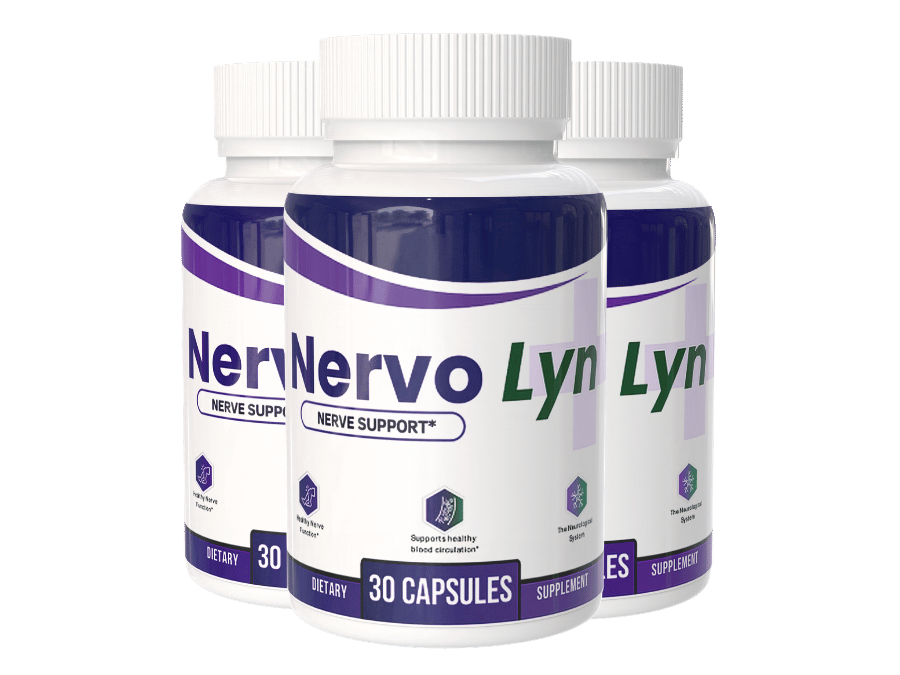
It was NervoLyn. Walt doesn't trust anything he can't see the inside of, so he put on his reading glasses and went through the label at the kitchen table, one line at a time:
- Turmeric extract, standardized to 95% curcuminoids. For the body's normal inflammation response around stressed nerves.
- Alpha lipoic acid. An antioxidant the company describes as one of the most studied for the nerves in the hands and feet.
- Butcher's broom. An old herb for circulation, to help blood reach the far ends of the longest nerves, the ones in the feet.
- L-carnitine and Coenzyme Q10. Fuel for the cells, so a nerve has energy for its own repair.
- Magnesium glycinate. A gentle form of magnesium tied to calmer nerve signals and better sleep.
"So the night lights fix the porch," Walt said, "and this goes after the wire." He showed the label to his doctor at his wrist follow-up, because he takes a blood pressure pill and metformin. She said nothing on it worried her, to take it with breakfast, and to keep doing the balance exercises.
What Walt noticed, and when
- Week 1. Nothing. He said so loudly, every day, to his wife.
- Weeks 2 and 3. A tingly, "waking up" feeling in the balls of both feet that he didn't like. Some people notice that kind of stirring before a quiet nerve settles, though nobody can promise what it means.
- Month 1. He noticed the floor through his shoes in the hallway for the first time in a long time. "Like somebody turned the volume up a notch."
- Months 2 and 3. Kevin took him back up the trail in October. Walt used the poles. He didn't use Kevin's arm.
Why so slow? Because nothing in the bottle numbs or stimulates anything. A coating that has been wearing for years is rebuilt on the body's own schedule, and the nerves to the feet are the longest in the body, so they're the last to get their turn. The company says most people notice early changes in three to four weeks and fuller results over eight to twelve weeks, which is why Walt's second order was the larger supply.
If you've caught yourself watching your feet on the stairs, this is the bottle Kevin set on his dad's kitchen table.
See the label Walt read with his reading glasses on →Who it may suit, and who it doesn't
It may be worth a look if you're over 50, your feet have gone numb, tingly or burning from the toes up, your doctor has ruled out the other causes of unsteadiness, and you're doing the safety work but want something for the nerves themselves.
It isn't for you if the numbness or weakness came on suddenly or on one side, if you have a drooping face, slurred speech, or a foot sore that won't heal. Those need a doctor today. If you take blood thinners, diabetes or blood pressure medicine, are in chemotherapy, or are pregnant or nursing, show your doctor the label first. A supplement doesn't replace night lights, handrails, or finding out why your feet went quiet.
The company offers 60 days with your money back if you're not satisfied. It's a one-time order, nothing that renews on its own. "Sixty days," Walt said. "My wrist was in a cast longer than that."
Every month the wire keeps leaking, the floor gets a little harder to feel. Walt's only regret is that it took a cast to make him look at his feet.
Start your 60 days before the next step you don't feel →So, can neuropathy cause balance problems?
Yes. When the nerves in your feet wear down, they stop telling your brain where your feet are, and your balance quietly leans on your eyes. That's why falls happen in the dark, on stairs, and when you're carrying something. Get checked for the other causes, make the house safer, practice balance, and check your feet every night. Results from any supplement vary from person to person, and Walt's are his own.
P.S. Walt replaced the feed corn and built a second handrail on the porch himself, cast and all. He still turns on the night lights. If you've had a fall you couldn't explain, or you've started looking down at every step, see what Kevin brought him. And if you take metformin, read Carla's story about the bottle she almost threw out next.
Individual results vary. Reader stories reflect personal experiences; names and some details changed for privacy. This is an advertisement and not a news article. Statements have not been evaluated by the FDA. This product is not intended to diagnose, treat, cure or prevent any disease.