
Nerve Health
Turmeric for Neuropathy: Why the Jar in Your Spice Cabinet May Never Reach Your Feet
Which turmeric, at what hour, and why the one on the grocery shelf is not the one the research was talking about.
By the HealthVital editorial team · 7 min read
Turmeric for neuropathy is the search that keeps landing in our inbox this fall. Golden milk recipes, "morning nerve drinks," capsules on sale two for one. And almost every email ends with the same line: "I've been taking it for weeks. Why are my feet still burning?"
Joan, 63, a retired school secretary from outside Knoxville, Tennessee, wrote us one of those emails in August. She had done everything right, by the rules she had been given. A teaspoon of turmeric in warm milk every night. A bottle of turmeric capsules from the pharmacy. Her doctor's prescription on top of it.

"It's the soles," she wrote. "Like hot sand. And then the toes go numb, so I can't tell if my slipper is on right. I put my feet up on the ottoman every night and I just wait for it to pass. It doesn't pass. It moves into my calves."
If you are reading this with your own feet up, you already know the feeling. What you may not know is why the turmeric you bought may have barely touched it.
Turmeric for neuropathy is not a silly idea. The jar is the problem.
Let's be fair to turmeric. The interest is real. The yellow compounds inside the root, called curcuminoids, have been studied for years for the way they calm the body's inflammatory response and soak up the oxidative stress that grinds at nerve tissue. Researchers have tested them in diabetic nerve damage, in nerve damage after chemotherapy, in nerve injury from pressure.
But here is the part the recipe videos skip:
- The powder in your spice cabinet is mostly not curcumin. Lab analyses of plain ground turmeric usually find curcuminoids make up only around 3 percent of it. The other 97 percent is root fiber, starch and color.
- Most of what you swallow never makes it into your blood. Curcumin is fat-loving and breaks down quickly in the gut and liver. A big share of it simply passes through.
- In at least one lab study, the plain powder did nothing. In a 2020 animal study on nerve pain from a pinched nerve, purified curcumin eased the pain responses. Turmeric powder from the same root, given the same way, showed no effect.
Read that last one twice. Same plant. One version worked in the lab. The kitchen version did not.
So when Joan asked us why three months of golden milk had done so little, the honest answer was uncomfortable: she may have been drinking a very pleasant cup of yellow milk that never got anywhere near the nerves in her feet.
"Which turmeric, and what hour?"
This is where the internet gets loud. You have probably seen the posts. A $4 morning recipe. A special turmeric from a small island in Japan, where people famously live into their hundreds. A second kitchen ingredient you are supposed to stir in with it, in a precise amount, at a precise time of day, or "it won't work."
Joan tried a version of it. She bought the fancy root, measured with her grandmother's teaspoons, set an alarm. Her verdict: "Maybe a little calmer in the mornings. But I could never tell if I'd gotten the amounts right, and by bedtime it was the same hot sand."
There is a reason people chase the exact island, the exact pairing and the exact hour. Every one of those details is an attempt to fix the same two problems: too little curcumin in the root, and too little of it getting in. A mug in a home kitchen is a hard place to solve that consistently. Some mornings you might. Most mornings you probably don't.
Why the burning keeps coming back even when the turmeric is "working"
There is a second thing almost nobody mentions, and it is the reason we think turmeric on its own rarely carries the whole load.
Every nerve running down into your feet is wrapped in a thin protective sleeve. Think of the rubber jacket around a garden hose. While the jacket holds, the water goes where it should. When it wears thin and starts to crack, the flow sputters. Some spots go dead, others spray. In a nerve, that sputtering is what you feel as burning, buzzing and numbness, often all in the same foot.
Several things wear on that sleeve at once:
- Oxidative stress and inflammation, the slow "rust" that turmeric is actually good at calming.
- Poor blood flow to the feet, which are the farthest point from the heart. A nerve that is short on blood is short on everything it needs to repair.
- Low energy inside the nerve cells themselves. The longest nerves in the body run all the way to your toes, and they burn through a lot of fuel just staying alive.
- A shortage of the minerals nerves use to fire calmly, magnesium being the one most adults over 60 run low on.
Turmeric works on the first one. Even a strong, well-absorbed turmeric is one worker on a crew of four jobs. That, more than any island or any hour, is why so many people say "it helped a little" and stop there.
The church parking lot
Joan's turn came from somewhere she did not expect: Ruth, a woman from her Sunday school class who had been nursing the same burning feet for two winters.

"She asked how my feet were," Joan told us. "I said I was on golden milk, round three. And Ruth just laughed, not mean, and said she'd been on golden milk too until her son-in-law, who reads every label in the store, made her look at how much curcumin was actually in a teaspoon."
Ruth had switched to a nerve formula that used a concentrated turmeric extract, standardized to 95 percent curcuminoids, instead of ground root, and paired it with the other pieces nerves seem to need. She pulled the bottle out of her purse right there in the parking lot. It was called NervoLyn.
Joan's first reaction: "Oh, here we go. Another bottle."
What Joan read on the label, standing in the kitchen
She didn't order that day. She went home, looked it up, and did what she always tells her grandkids to do: read the back before the front. Here is what she found, and why each one made her stop arguing with herself.
- Turmeric extract, 95% curcuminoids. "That's the number I needed. Not 3 percent. Ninety-five." This is the piece aimed at the inflammatory "rust" on the nerve's sleeve.
- Alpha lipoic acid. One of the most studied antioxidants for nerve health in the feet, researched for its role in easing tingling and burning. It covers the oxidative side turmeric can't fully handle alone.
- Butcher's broom root. A traditional European herb for blood vessel tone. This is the circulation piece, the part that helps blood reach the farthest nerves in the body.
- L-carnitine and CoQ10. Both support energy production inside cells, which matters for the long nerves that run to your toes.
- Magnesium glycinate, 80 mg. A gentle, well-absorbed form of magnesium, the mineral nerves use to send calm, steady signals.
"So it wasn't turmeric instead of everything else," she said. "It was turmeric done properly, plus the four other jobs. That's when I stopped calling it another bottle."
What finally tipped her was the back of the order page: a 60-day money-back guarantee, and no subscription. "If it didn't work, I'd be out a phone call. I'd been out a lot more than that on golden milk."
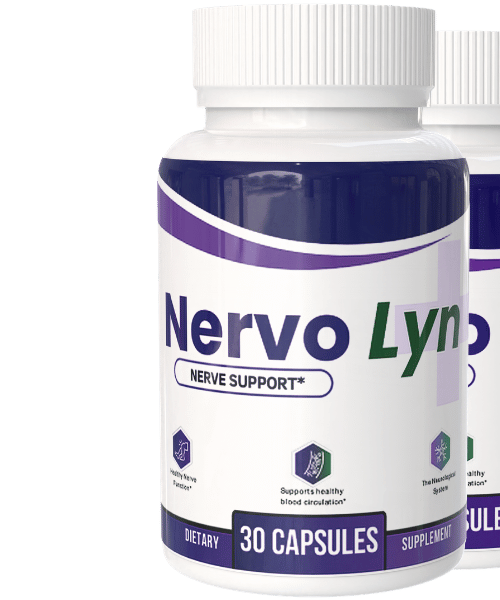
Curious what a 95% turmeric extract looks like next to your spice jar?
See the formula Joan swapped her golden milk for →How she takes it
One capsule a day. That's the whole routine. Joan takes hers with breakfast, because curcumin and the other fat-loving nutrients tend to absorb better with food, and because breakfast is the one meal she never skips. No measuring spoons, no alarm, no special root from the other side of the world.
What Joan noticed, week by week
Week 1: Nothing dramatic, and she says so honestly. "If anything, I noticed I wasn't dreading the evening as much. But that could have been in my head."
Weeks 2 to 3: The hot-sand feeling started showing up later in the evening. "It used to start at dinner. Now it was nine, nine-thirty."
Month 1: The first night she realized she had gone to bed without putting her feet up on the ottoman first. "I just forgot. That had never happened."
Months 2 to 3: She could feel the floor under her toes again on the walk to the mailbox, and she was back to standing through the whole hymn on Sundays. The burning still visits now and then, she says, "but it knocks now. It used to just walk in."
Why does it take this long? Because nerves are among the slowest tissues in the body to repair. The protective sleeve doesn't rebuild in a weekend. Most people who notice a change describe it building over 8 to 12 weeks, and the company itself suggests 90 to 180 days of steady use. That's why Joan went straight to the larger supply on her second order.
Joan's only regret? "The three months I spent stirring a spoon."
Give your feet the 90 days Joan gave hers →The whole picture, in one place
What it is: NervoLyn is a daily nerve support capsule made in the USA in a GMP-certified facility.
Why Joan chose it over turmeric alone: it uses a concentrated turmeric extract (95% curcuminoids) instead of ground root, and pairs it with alpha lipoic acid, butcher's broom, L-carnitine, CoQ10 and magnesium glycinate, so the inflammation, the circulation, the cell energy and the mineral side are all covered at once.
How to use it: one capsule a day, with a meal.
How long: give it at least 8 to 12 weeks. The maker recommends 90 to 180 days of consistent use.
Who it may be for: adults with burning, tingling or numbness in the feet or hands who have tried turmeric, creams or soaks and want something that goes after more than one cause at a time.
Who should skip it, or ask first: anyone who is pregnant or nursing, anyone on blood thinners or several prescription medicines, and anyone with sudden, one-sided numbness or weakness, which needs a doctor today, not a supplement. Keep taking what your doctor prescribed and bring the label to your next visit.
The guarantee: 60 days, money back, no subscription and no auto-billing.
Nothing to lose but another night with your feet on the ottoman.
Try NervoLyn with the 60-day money-back promise →P.S. Joan still keeps a jar of turmeric in the cabinet. She uses it in her chicken and rice now, which is what it was always good at. The ottoman is back to being a footstool for her grandson. If your evenings still end with your feet up and your jaw clenched, take a look at the bottle Ruth pulled out of her purse.
Individual results vary. Reader stories reflect personal experiences; names and some details changed for privacy. This is an advertisement and not a news article. Statements have not been evaluated by the FDA. This product is not intended to diagnose, treat, cure or prevent any disease.