
Nerve Health
Tingling Feet at Night? Why It Gets Worse When You Lie Down
If the pins and needles get louder the moment you lie down, you are not imagining it, and it is not "just age."
By the HealthVital editorial team · 6 min read
Tingling feet at night is one of the most searched nerve complaints in America this fall, and the reason is simple: it is the symptom that steals sleep. During the day you can ignore it. At night, when you finally lie still, it turns up.
Margaret, 64, from Ohio, described it to us like this: "It's pins and needles from the toes up. Not painful at first. Then one night it was burning too, and I was up at 2 and 3 a.m. walking the hallway because standing was the only thing that helped."

If that sounds like your nights, keep reading. There is a physical reason it happens, and there is a piece of it almost nobody explains.
Why the tingling is worse when you lie down
Health reporting published in mid-September lists the usual suspects behind night-time foot tingling: nerve damage linked to blood sugar, low vitamin B12, pinched nerves, poor circulation and some medications. Up to half of people with diabetes develop some form of neuropathy.
The night-time part has its own explanation. Lying still shifts circulation and nerve pressure. Your feet warm up under the covers. And without daytime noise competing for your attention, every misfire from an irritated nerve gets through. Many people notice it most between 1 and 4 a.m.
- Pins and needles or buzzing in the toes and soles
- A burning or "on fire" feeling that starts when you lie down
- Numbness creeping up toward the ankles
- Waking at 2 or 3 a.m. and never falling back asleep
- Feeling unsteady when you first stand up in the morning
Two or more of these, most nights? You are not alone, and you were probably told to live with it. Margaret was told the same thing.
What most people try first
Compression socks. Foot soaks. A heating pad, then an ice pack. Gabapentin, if a doctor offered it. Any of these can help a little, for a while. But Margaret's words were: "Every fix worked for an hour. None of them changed the next night."
That is because all of them work on the signal. None of them works on why the nerve is misfiring.
The piece that usually gets missed
Here is what researchers found when they measured people with neuropathy: levels of three B vitamins the nerves depend on, B1, B9 and B12, ran up to 73% lower than normal. Without them, the nerve slowly loses the protective coating around it. A bare nerve is a noisy nerve. That is when the tingling, burning and numbness begin.
And the vitamins are not simply "missing." Everyday wear drains them, and so does the oxidative stress that builds up in nerve tissue with age and with blood sugar that runs high. At the same time, the tiny blood vessels that feed the nerves in your feet narrow over the years, so whatever you do take has a harder time getting there. The nerve ends up short twice: short on what it needs, and short on the blood that delivers it.
That is why swallowing a B-complex on its own tends to feel like pouring water into a bucket with a hole in it. Margaret did exactly that for three months. The approach that finally changed her nights went after the hole and the delivery route instead, and we will lay out all of it at the end of this piece: what she took, why she chose it, what is inside, and how long it took. First, the nights.
Why Margaret ordered this one, after giving up on three others
Margaret is not a supplement person. By the time she wrote to us she had a drawer of half-empty bottles and a short list of things that had not worked: the drugstore B-complex (three months, no change at night), a lidocaine foot cream that numbed her toes while the burning carried on underneath, and the prescription her doctor offered, which took the edge off and left her, in her words, "foggy until lunch."
The name came from a woman in her Tuesday water-aerobics class at the Y, who said her own feet had stopped waking her up and wrote it on the back of a receipt. Margaret didn't order that day. "I'd already been burned by the B-complex," she told us. "So I went home and read the label first."
What she read is what convinced her. It was not another vitamin pill. It went after the two things the B-complex never touched, the wear on the nerve and the blood flow to the feet. It was one capsule a day. And it came with a 60-day money-back guarantee, which meant the worst case was two months of trying and a refund.
The bottle was NervoLyn.
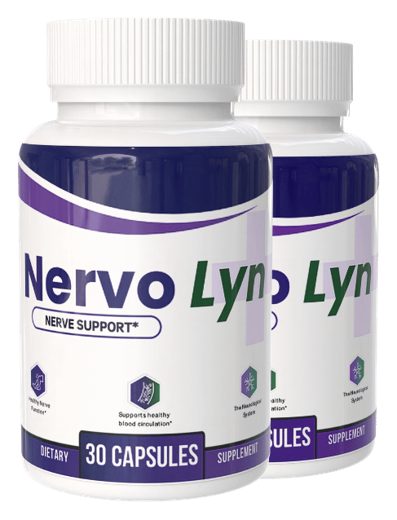
What is inside, and why it matches the problem
These are the ingredients the company lists on its own page, with what each one is there to do in plain terms:
- Magnesium glycinate (80 mg). Nerves need magnesium to fire and, just as important, to settle back down. The glycinate form is gentle on the stomach.
- Alpha lipoic acid. One of the most studied antioxidants for nerve health in the feet. This is the part aimed at the oxidative stress that drains the nerve, the hole in the bucket.
- Butcher's broom. A plant extract long used to support circulation in the legs and feet. This is the delivery route.
- L-carnitine and coenzyme Q10. Both help cells turn fuel into energy, and long nerves are some of the hungriest cells you have.
- Turmeric. For the quiet, background inflammation that keeps an irritated nerve irritated.
Margaret's own summary: "I had been feeding the nerve. Nobody told me to fix the pipes."
How she takes it
One capsule a day, with breakfast, every day. The company is clear that consistency matters more than timing. She told her doctor before starting and kept everything else the same, including checking her blood sugar.
What Margaret noticed, week by week
- Week 1. Nothing. She was still up at 2 a.m. walking the hallway, and she almost put the bottle in the drawer with the others.
- Weeks 2 and 3. "About ten days in, I realized I hadn't gotten up in the night. That was the first thing. The tingling was still there in the evening, but quieter."
- Month 1. "By the end of the month I wasn't thinking about my feet when I went to bed." Her toes still buzzed after a long day on her feet, but it no longer followed her into the night.
- Months 2 and 3. The unsteady first step out of bed, the one she used to take holding the dresser, was gone most mornings. She and her husband went back to their Sunday walk around the park.

Why does it take weeks and not days? Because the nerve's protective coating and the blood supply around it rebuild slowly. The company says most people notice early changes in comfort and circulation within 3 to 4 weeks, with fuller results building over 8 to 12 weeks of daily use. That is why Margaret's second order was the three-month supply. Results vary from person to person, and some people take longer.
Who this is for, and who should skip it
It may make sense for you if you are over 50, the tingling or burning is worse at night, you have already had blood sugar, B12 and thyroid checked, and the socks, soaks and creams only help for an hour.
Skip it and call a doctor today if you have sudden severe pain, numbness that spreads fast, a wound on your foot that will not heal, or any loss of bladder control. That needs a doctor, not an article. If you are pregnant, nursing, or take several prescriptions, show the label to your doctor first.
The guarantee
The company's order page shows a 60-day money-back guarantee, and its main site says that if you are not satisfied you can email them within 60 days of purchase for a refund. That is the window Margaret gave herself: two months, and a decision at the end of it.
If your feet are what wake you at 2 a.m., this is what Margaret ordered.
See the formula Margaret takes every morning →Before you order anything, write down when your symptoms start, how long they last and what you have already tried, and bring that list to your next appointment. Then give whatever you choose the weeks it actually needs.
Two months, one capsule a day, and a refund if it does nothing for you.
Try NervoLyn with the 60-day guarantee →P.S. Margaret still walks the hallway sometimes, but now it is at 7 a.m. on her way to the coffee maker, not at 2 and 3 a.m. with her feet on fire. If tonight is going to be another hallway night, start with the page she started with.
Individual results vary. Testimonials reflect personal experiences; names changed for privacy. This is an advertisement and not a news article.