
Reader Story
"How I Cured My Neuropathy in Feet": What Dale Typed at 3 a.m., and What May Finally Have Helped
His blood sugar was finally under control. His feet didn't get the message. Here is why that happens, and what changed for him.
By the HealthVital editorial team · 8 min read
At 3:12 one morning in July, Dale, 59, a parts manager from Fort Wayne, Indiana, sat on the edge of the tub with his feet in cold water and typed six words into his phone: how i cured my neuropathy in feet.
"I didn't even write it as a question," he told us later. "I wanted to find the one guy who'd fixed it and just do whatever he did." Neuropathy in feet had been his nightly company for almost three years by then. Burning on the soles, electric zaps in the big toes, and a numb strip along the outside of each foot that made him miss the bottom stair twice that summer.
His wife Karen wrote to us first, back in August. Dale wrote the rest himself, which, Karen says, "tells you how much it changed."
"My sugar is fine now. So why are my feet still on fire?"
This was the part that made Dale angry. He had been diagnosed with type 2 diabetes at 54. He did the work. He dropped 30 pounds, swapped the gas-station donuts for eggs, took his metformin, and got his A1c down from 8.9 to 6.4. His doctor shook his hand.
And the burning got worse.
If that is your story too, you are not doing something wrong. Here is what nobody explained to Dale in a way that stuck: getting your sugar down may slow new damage, but it doesn't rebuild the old damage on its own.
Every nerve that runs down to your toes is wrapped in a thin protective sleeve, a little like the plastic coating on the wire inside a lamp cord. Years of high sugar, poor circulation and everyday wear thin that coating out. Once it's thin, the signal leaks. Some spots go quiet, which is the numbness. Others misfire, which is the burning and the zaps.
Fixing the blood sugar is like turning off the faucet that was flooding the basement. Smart. Necessary. But the water damage on the walls is still there, and it doesn't dry itself out overnight.
One doctor who has been making the rounds online has a dramatic name for what keeps wearing that sleeve down. He calls it a "nerve parasite." It isn't a bug at all, it's his nickname for a slow chemical wear on the coating that, in his view, keeps going long after the sugar is handled. Whatever you call it, the question Dale cared about was simpler: what actually helps the coating hold?
What that 3 a.m. search actually turns up
Dale did what most people do. He scrolled. If you have typed "how I cured my neuropathy in feet" yourself, you have probably seen the same mix he did: forum threads where one person swears by tart cherry juice and magnesium, another by a foot bath with an electric current, a third by red light, and then a long reply underneath from someone who has had it for twenty years saying there is no cure and to stop wasting money.
"Every story was one guy," Dale said. "One guy, one thing, and no reason why it worked for him. I couldn't tell which ones were real and which ones were just lucky."
That is the honest problem with the search. The stories are real people, and some of them really did get better. But almost none of them explain why, so you can't tell which one fits your feet. Dale wanted the why first. It took him another two months to get it.
The four things Dale tried first
1. The prescription. His doctor started him on a nerve pain pill. "It turned the volume down, I'll give it that," Dale said. "It also turned me down. I nodded off at my desk at two in the afternoon and got dizzy getting out of the truck." Those pills can help a lot of people. For Dale, the trade wasn't worth it.
2. Vitamin B12 from the pharmacy. Metformin can lower B12 over time, and low B12 can make nerves worse, so this was a fair thing to check. His levels came back fine. The bottle did nothing he could feel.
3. A $60 numbing cream. "Good for about two hours. Then I'm back in the tub."
4. A foot-zapper machine from a late-night TV ad. "It's in the garage. Next to the ab roller."
Notice the pattern. Every one of those either quiets the signal for a while, or fixes one piece that wasn't actually low. None of them was aimed at the sleeve itself, or at what the nerve needs to keep it together: blood flow reaching the toes, protection from the oxidative "rust," enough energy inside the nerve cells, and the minerals nerves use to fire calmly.
That gap, between turning the signal down and giving the nerve what it needs to hold together, is the piece most quick answers skip.
Karen's sister, and the bottle on the kitchen table
The turn didn't come from a doctor or an ad. It came from Pam, Karen's older sister in Ohio, whose husband had been fighting the same burning feet since his own diabetes diagnosis.

"Pam called on a Sunday and said, 'Gary's sleeping in the bed again.' That's all she had to say," Karen told us. Gary had stopped the pills for the same fog Dale hated, and a nerve formula was the thing that had stuck. Pam texted Karen a photo of the bottle, front and back.
Karen ordered it that night. When the box came, she set it on the kitchen table next to Dale's coffee and waited.
"I looked at it and said, 'Another one?'" Dale remembers. "She said, 'Read the back before you say anything else.' So I put my readers on."
What Dale read, and why he stopped arguing
The front said NervoLyn. Dale skipped it. He reads labels the way he reads part numbers, back first. Here is what he found, and what each one meant to a man whose feet had been burning for three years.
- Magnesium glycinate, 80 mg. "My doctor had actually told me to try magnesium. Never said which kind." Glycinate is a gentle, well-absorbed form, and magnesium is a mineral nerves rely on to send calm, steady signals.
- Alpha lipoic acid. One of the most researched antioxidants for nerve health in the feet, studied for its role in easing tingling and burning. "That's the one Gary swore by."
- Butcher's broom root. A traditional herb for blood vessel tone and circulation. "My feet are ice cold to the touch and on fire inside. Nobody ever talked to me about blood flow to the feet."
- Turmeric extract, standardized to 95% curcuminoids, for the body's inflammatory response, the "rust" on the sleeve.
- L-carnitine and CoQ10, which support energy production inside cells, including the long nerves that run all the way to the toes.
"That's when it made sense," Dale said. "It wasn't one thing pretending to fix everything. It was five or six jobs, and each one matched something that was actually wrong with my feet."
The last thing he checked was the guarantee: 60 days, money back, no subscription. "Okay. Worst case, it goes in the garage with the zapper, and we get our money back."
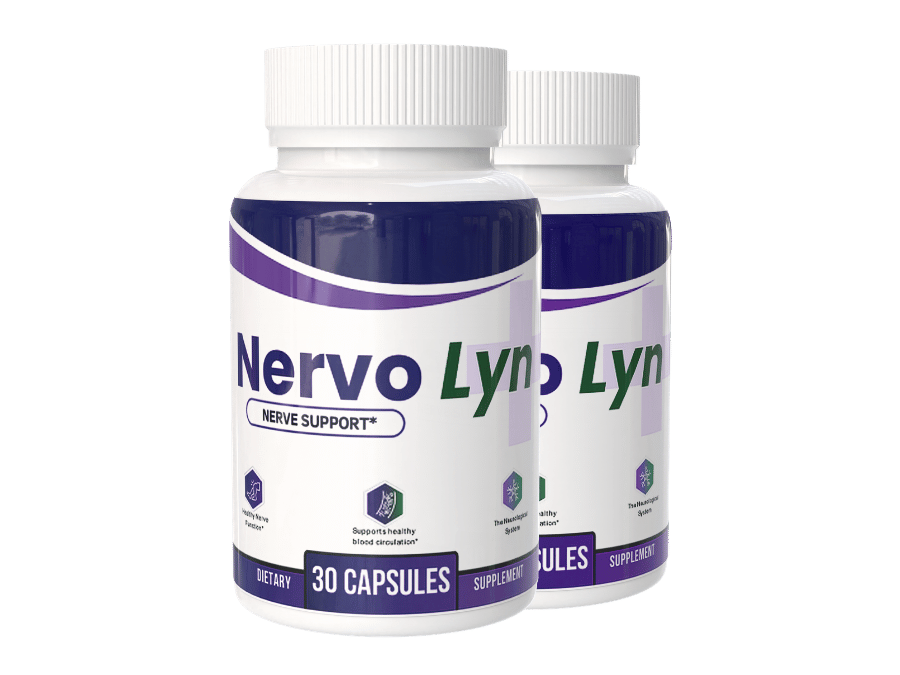
Want to read the same label Dale read with his reading glasses on?
See the formula Karen set next to Dale's coffee →How he takes it
One capsule a day, with breakfast. Dale keeps his doctor's appointments and his metformin exactly as before. He brought the bottle to his next checkup, and his doctor's only comment was to keep watching his feet every night, which, Dale admits, he had stopped doing.
What changed for Dale, week by week
Week 1: Nothing he could point to. "I'm not going to lie to you. I was looking for a reason to say I told you so."
Weeks 2 to 3: He slept until 4:30 instead of 3. "An hour and a half sounds like nothing. It isn't nothing."
Month 1: The night he realized he hadn't sat on the edge of the tub in a week. The zaps in his big toes came maybe twice, instead of every night.
Months 2 to 3: He could feel the brake pedal through his work boots again, a small thing that had quietly scared him for a year. In September he stood on the dock for a whole morning of fishing with his grandson. "I was tired from the fishing. Not from my feet."
Is he cured? Dale is careful about that word now. "It's not gone. Some nights it still buzzes. But I went from looking for the guy who cured it to being able to live my day without thinking about my feet. If that's all it ever does, it's plenty."
Why so slow? Because nerves are among the slowest-repairing tissues in the body, and that coating doesn't rebuild in a week. Most people who notice a change describe it building over 8 to 12 weeks, and the maker recommends 90 to 180 days of steady use. That's why Dale's second order was the bigger supply.
"The only thing I'd do differently? Start three years earlier."
Give your feet the 12 weeks Dale gave his →Everything Dale wishes someone had told him, in one place
What it is: NervoLyn is a once-a-day nerve support capsule, made in the USA in a GMP-certified facility.
Why it made sense for his neuropathy in feet: his sugar was already handled. What was left was the nerve itself: circulation to the feet (butcher's broom), oxidative and inflammatory wear (alpha lipoic acid, turmeric 95%), energy inside the nerve cells (L-carnitine, CoQ10) and calm signaling (magnesium glycinate).
How to use it: one capsule a day with a meal. Keep taking what your doctor prescribed.
How long: plan on at least 8 to 12 weeks before you judge it. The maker suggests 90 to 180 days.
Who it may be for: adults with burning, tingling, zapping or numb feet, especially people whose blood sugar is under better control but whose feet haven't caught up, and people who couldn't live with the side effects of nerve pain pills.
Who should not start without a doctor: anyone pregnant or nursing, anyone on blood thinners or a long list of prescriptions, and anyone with an open sore or wound on the foot, which needs medical care first. Sudden numbness or weakness on one side of the body is an emergency, not a supplement question.
The guarantee: 60 days, money back, no subscription, no auto-billing.
If it ends up in the garage next to the zapper, you get your money back.
Try it for 60 days, or get every dollar back →P.S. Dale still has that search in his phone history: how i cured my neuropathy in feet. He says he never found the guy. He found the kitchen table instead, and a wife who made him read the back of a bottle. If you're typing the same thing at 3 a.m. with your feet in a tub of cold water, start with the page Karen started with.
Individual results vary. Reader stories reflect personal experiences; names and some details changed for privacy. This is an advertisement and not a news article. Statements have not been evaluated by the FDA. This product is not intended to diagnose, treat, cure or prevent any disease.