
Nerve Health
Feet Feel Like You're Walking on Cotton? Why That Numb, Padded Feeling Is Not the Good News It Seems
When the burning finally quiets down and your feet just feel "muffled," a lot of people think the worst is over. Often it is the opposite.
By the HealthVital editorial team · 7 min read
If your feet feel like you're walking on cotton, on a folded-up sock, or on a thin layer of pebbles that isn't there, you are describing one of the most common things people with nerve trouble in the feet tell their doctors. And it is the one they most often misread.
Carol, 68, from Indiana, wrote to us about her husband Ron. "For two years his feet burned at night. Then, last winter, the burning eased off and we were relieved. He said his feet just felt 'padded,' like he had thick socks on when he was barefoot. We thought it was getting better. Then he missed the bottom step in the garage and went down on the concrete."

Ron broke nothing, and he was lucky. But the fall made Carol start asking the question this article is about: what does it actually mean when the burning turns into numbness?
What the "walking on cotton" feeling really is
A nerve-health guide published this September explains it in plain terms: the cotton feeling happens when your brain is receiving weak, incomplete signals from the nerves in the soles of your feet, and it fills in the gaps with a muffled, padded sensation. The phantom pebble feeling is the same story from a different set of fibers, the small ones that start firing on their own.
In other words, the cotton is not your feet getting calmer. It is the line between your feet and your brain getting quieter.
That is why it matters. The same guide points out that when the soles lose sensation, you also lose some of your sense of where your feet are, and falls among older adults with neuropathy are a leading cause of serious injury. Studies on people with diabetic neuropathy keep finding the same thing: numb feet, worse balance, more falls, especially in the dark and on uneven ground.
Check yourself against this list:
- Your feet feel padded, thick or "asleep" even when you are barefoot
- You feel a lump, a seam or a pebble in your shoe and nothing is there
- You look down at the stairs because you cannot quite feel them
- Getting out of bed at night, you reach for the wall or the dresser first
- The burning you used to have is quieter, but the numbness has crept higher
If two or more of these are true for you most days, you are not imagining it. And "it stopped hurting" is not the same as "it got better."
What Ron tried, and why none of it touched the numbness
Ron had done everything he was told. He took a B12 tablet every morning for most of a year. He used a capsaicin cream when the burning was bad. His doctor put him on gabapentin, which helped him sleep and made him, in Carol's words, "slow and a little bit gone in the afternoons." Carol bought him compression socks and a foot massager for Christmas.
Some of that helped with the burning, for a while. None of it did anything for the cotton. "Every one of those things was about calming the feet down," Carol said. "Nobody was talking about the fact that his feet were going quiet."
That is the part most people are never told. Creams and pills that quiet the nerve work on the signal. But when the problem is a signal that is getting too weak to get through, quieting it further is not the answer.
The piece that usually gets missed
Think of each nerve in your foot as a long phone line running from your toes to your spine, some of them three feet long. For that line to carry a clear signal, three things have to be in decent shape.
The insulation, the protective coating around the nerve, has to hold up against the daily wear that comes with age and with blood sugar that runs high. The power has to be there, because a nerve that long is one of the hungriest cells in your body, and when it runs short on energy, the far end, the feet, goes first. And the supply line, the tiny blood vessels that feed the nerve, has to stay open, because those vessels narrow over the years and whatever the nerve needs has a harder time getting there.
When the insulation frays, the power runs low and the supply narrows, all at the same time, the signal does exactly what Ron described: first it crackles, which is the burning and tingling, and then it fades, which is the cotton.
A single vitamin works on one corner of that, at best. Ron's B12 was not wrong. It was just one tool for a three-part problem. The approach that changed his footing went after all three, and we will lay out exactly what it was at the end of this piece: what he takes, why Carol chose it, what is inside and how long it took. First, how it found them.
The bottle that came out of a purse at a grandson's football game
Carol is the skeptic in the family. "I've thrown out more supplements than I've finished," she told us. So when Ron's sister-in-law, Jan, pulled a white bottle out of her purse in the bleachers at their grandson's Friday night game and said, "This is what got Dale back on the golf course," Carol's first reaction was to roll her eyes.

What changed her mind was Jan's son, Mark, sitting one row down. He told her his dad had been the same as Ron: burning for years, then numb, then a scary slip on the boat ramp. "Dad was the one who'd say anything was a waste of money," Mark said. "He's the one who reorders it now."
Carol still did not buy it that night. She took a photo of the label, went home, and read it at the kitchen table with her reading glasses on, half expecting to find one more B-vitamin pill with a pretty name. It was not. The label listed something for the insulation, something for the power and something for the supply line, the three corners of the problem. One capsule a day. And a 60-day money-back guarantee, which, for Carol, settled it. "Worst case, we were out two months and got our money back. Best case, Ron stopped falling."
The bottle was Arialief.
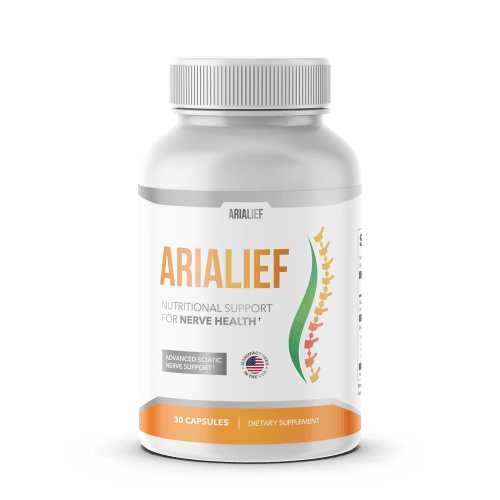
What is inside, and why it matches the problem
These are the ingredients printed on the Arialief Supplement Facts panel, in the order Carol went through them at her kitchen table:
- Magnesium glycinate (80 mg of magnesium). Nerves need magnesium to fire cleanly and to settle back down afterward. The glycinate form is the gentle-on-the-stomach kind, which mattered to Ron.
- Alpha lipoic acid. One of the most studied antioxidants for nerve health in the feet. This is the part aimed at the daily wear on the insulation.
- Butcher's broom root extract. A plant extract long used to support circulation in the legs and feet. This is the supply line.
- L-carnitine and coenzyme Q10. Both help cells turn fuel into energy. This is the power, for the longest, hungriest nerves you have.
- Turmeric extract (95% curcuminoids). For the quiet, background inflammation that keeps an irritated nerve irritated.
Carol's summary: "Everything we'd tried was trying to shut his feet up. This was the first thing that looked like it was trying to get them talking again."
How Ron takes it
One small capsule a day. The company says morning or night, whichever fits your routine; Ron takes his with breakfast. Because he is on other medications, he takes it about 30 minutes apart from them, which is what the company recommends, and he told his doctor before he started.
What Carol noticed, week by week
- Week 1. Nothing she could point to. Ron said he was sleeping a little better, and she put that down to wishful thinking.
- Weeks 2 and 3. "He came in from the garage and said, 'I can feel the grit on the floor.' He was barefoot, sweeping. He hadn't said anything like that in two years."
- Month 1. The pebble-in-the-shoe feeling came and went instead of being there all day. He still held the rail on the stairs, but he stopped staring down at his feet on every step.
- Months 2 and 3. The 2 a.m. trip to the bathroom stopped being a hand-on-the-wall trip most nights. He went back to walking the dog around the block after supper, which he had quietly stopped doing after the fall.
Why weeks and not days? Because the insulation and the tiny vessels around a nerve rebuild slowly, and the longest nerves, the ones that reach your toes, are the slowest of all. The company itself says some people notice a difference within a week, but for most it takes three to six months to see the best results, and it recommends staying with it for at least four to six months. That is why Carol's second order was the larger supply. Results vary from person to person, and some people take longer.
If your feet have gone from burning to "cotton," this is the formula Ron takes every morning.
See what's on Ron's windowsill →Who this is for, and who should skip it
It may make sense for you if you are over 50, your feet feel numb, padded or "full of cotton," the old burning or tingling has not really gone away, you have already had blood sugar, B12 and thyroid checked, and the creams and socks only ever helped the pain, not the numbness.
Skip it and call a doctor today if the numbness came on suddenly, is only on one side, is spreading quickly, or comes with weakness in the leg, a foot wound that will not heal, or any change in bladder or bowel control. That needs a doctor, not an article. If you are pregnant, nursing or take several prescriptions, show the label to your doctor first.
And whatever you decide, do the simple things the fall-prevention people recommend: a night light between the bed and the bathroom, a rail on every set of steps, and shoes, not socks, on smooth floors.
The guarantee that made Carol say yes
The Arialief order page shows a 60-day satisfaction promise from the original purchase date: if you are not satisfied, you contact the company within 60 days and they make it right. There is no subscription and no auto-shipment; it is a one-time purchase. That was Carol's deal with Ron: two months, an honest look at his feet, and a refund if nothing changed.
Two months, one capsule a day, and your money back if your feet don't tell you the difference.
Try Arialief with the 60-day promise →Before you order anything, do one thing tonight: stand barefoot on the kitchen floor with your eyes closed for ten seconds, holding the counter. If you sway, or you cannot tell whether you are on tile or a rug, write that down and bring it to your next appointment. Then give whatever you choose the months it actually needs.
P.S. Ron still takes the garage steps slowly. But now he feels the bottom one under his heel before he puts his weight on it, and Carol has stopped holding her breath every time he goes out there. If your feet have started to feel like cotton, start with the page Carol read at her kitchen table.
Individual results vary. Testimonials reflect personal experiences; names changed for privacy. This is an advertisement and not a news article.